Quick answer
Buy the Omega if you want the most watch for the money: it costs about US$6,700 new, has a sapphire display back, a helium escape valve and 15,000-gauss magnetic resistance. Buy the Rolex if you care about a slimmer case, a better bracelet and resale value. A Submariner Date 126610LN lists at US$11,350 but trades used at US$14,000 – US$15,600, so it costs more to buy and loses far less when you sell.
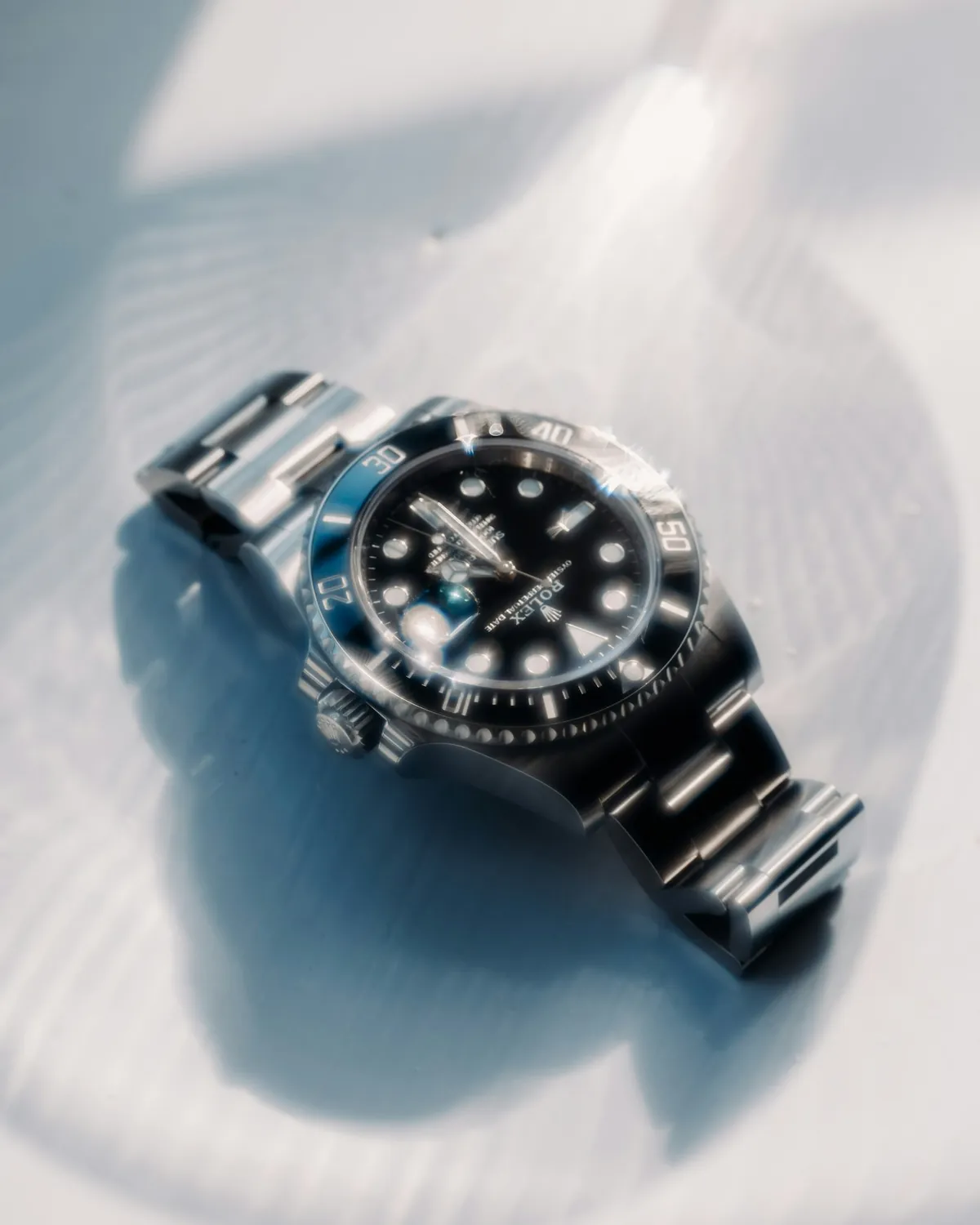
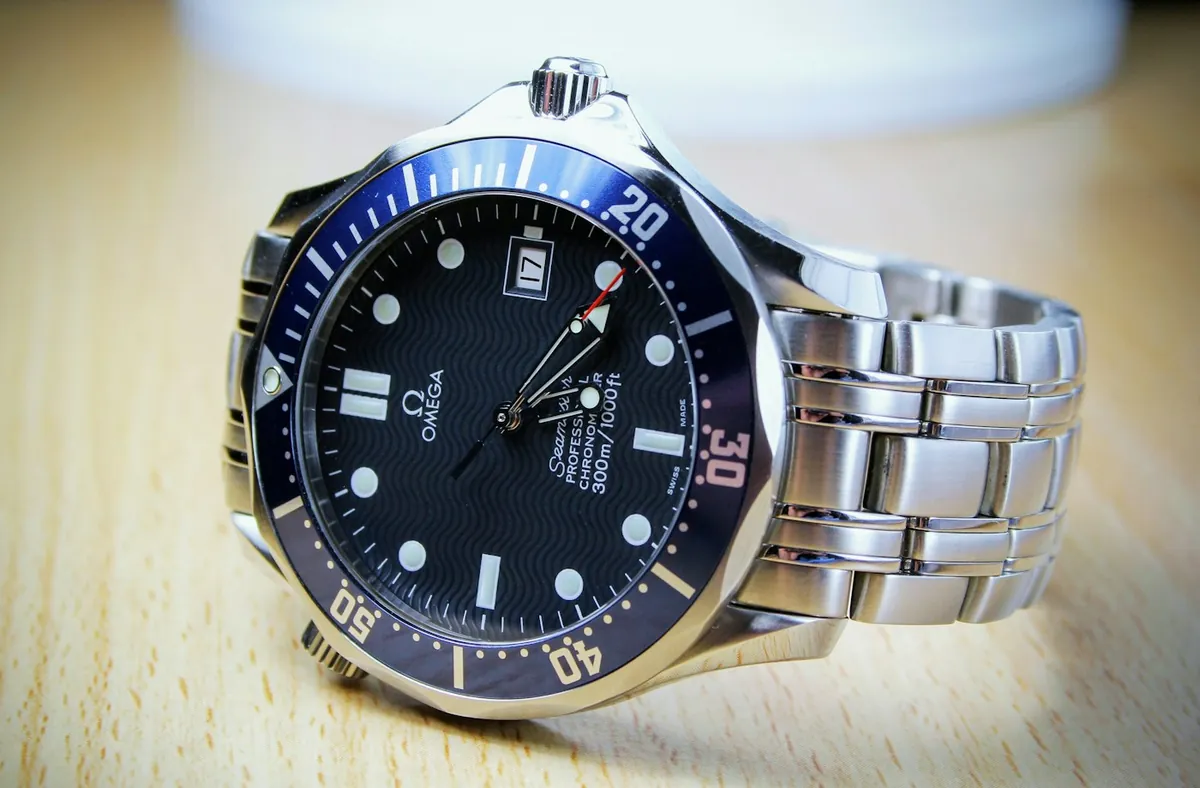
This page compares one specific pair. On the Rolex side, that is the 126610LN in Oystersteel, launched in 2020. On the Omega side, it is the Seamaster Diver 300M Co-Axial Master Chronometer 42 mm, reference 210.30.42.20.01.001, black ceramic dial on the steel bracelet. Omega launched this generation, with calibre 8800 and the laser-engraved wave dial, in 2018. Other dial colours share the same specs, so most of what follows applies to them too.
Rolex Submariner vs Omega Seamaster: specifications
The Rolex figures come from our Submariner reference data. The Omega figures come from Omega's official product page, checked in October 2026. Its used prices come from dealer listings at Bob's Watches.
| Spec | Rolex Submariner Date 126610LN | Omega Seamaster Diver 300M |
|---|---|---|
| Case diameter | 41 mm | 42 mm |
| Thickness | 12.5 mm | 13.56 mm |
| Lug to lug | About 48 mm (not published by Rolex) | 49.9 mm |
| Lug width | 21 mm | 20 mm |
| Case material | Oystersteel | Stainless steel |
| Bezel | Unidirectional, black Cerachrom insert, platinum-coated numerals | Unidirectional, black ceramic with white enamel diving scale |
| Dial | Black lacquer, Chromalight lume | Polished black ceramic, laser-engraved waves, Super-LumiNova |
| Crystal | Sapphire, Cyclops over the date | Domed sapphire, anti-reflective |
| Caseback | Solid, screw-down | Sapphire display back |
| Helium escape valve | No | Yes, conical valve at 10 o'clock |
| Calibre | Rolex 3235, automatic, date | Omega 8800 Co-Axial, automatic, date |
| Power reserve | 70 hours | 55 hours |
| Certification | Superlative Chronometer (−2/+2 s/day) | Master Chronometer (METAS) |
| Magnetic resistance | Parachrom hairspring (no gauss rating published) | 15,000 gauss |
| Water resistance | 300 m | 300 m |
| Bracelet and clasp | Oyster, Oysterlock clasp with Glidelock extension | Steel bracelet, foldover clasp with diver extension |
| Manufacturer warranty | 5 years | 5 years |
| US retail | US$11,350 | US$6,700 |
| Retail in Malaysia | RM49,100 | ≈ RM27,300 (US price converted; local list not verified) |
| Pre-owned, excellent with papers | US$14,000 – US$15,600 | About US$5,000 – US$5,500 (dealer asks) |
| Pre-owned vs retail | About 30% above | About 18–25% below |
Two rows explain most of the decision. The Omega offers more features on paper, from the display back to the gauss rating. However, the Submariner's price rows run the other way: it is dearer new and still dearer used.
Design and wearability
Case shape and size on the wrist
The Submariner is the plainer object. Its 41 mm case has slim lugs, a flat profile and a black dial with nothing on it except markers, text and the date. That restraint is the point. It goes with a suit, a T-shirt or a wetsuit, and it hides scratches well because the lugs are brushed on top.
By contrast, the Seamaster is busier and more sculpted. Its twisted "lyre" lugs, scalloped bezel edge, skeleton sword hands and wave-engraved dial all come from the 1993 Diver 300M that Pierce Brosnan wore as James Bond. In addition, the helium valve sits at 10 o'clock as a second crown. Many people prefer that character. Still, it is harder to dress down than the Rolex.
Size is where the numbers matter. The Omega is only 1 mm wider. Yet it is just over 1 mm thicker and nearly 2 mm longer lug to lug, so it wears bigger than the diameter suggests. On a 16.5 cm (6.5 in) wrist, the Seamaster can reach the edges, whereas the Submariner sits inside them. On wrists over 18 cm (7.1 in), both look proportionate, and the Omega's extra presence can even work in its favour.
Bracelet and clasp
Rolex's bracelet is the strongest single argument for the Submariner. The Oyster bracelet uses solid links, tapers from 21 mm, and closes with an Oysterlock clasp. Its Glidelock rail slides out in roughly 2 mm steps for about 20 mm without tools. Therefore you can loosen it on a hot afternoon in Kuala Lumpur and tighten it again in an air-conditioned office in seconds.
The Omega bracelet is well made and comfortable, with a flip-out diver extension for wetsuits. However, fine adjustment day to day is less convenient than Glidelock. If the bracelet matters to you, read our guide to Rolex bracelets and clasps before deciding.
Dial, bezel and legibility
Both bezels are ceramic, so neither will fade like the old aluminium inserts. The Submariner's numerals are coated in platinum, while the Omega's scale is filled with white enamel. In daylight both read cleanly. At night, Rolex's Chromalight glows blue and Omega's Super-LumiNova glows strongly too. Neither is a weak point.
The one design quirk is the date. The Submariner's Cyclops lens magnifies it about 2.5 times, which some love and some find clumsy. The Omega puts a small date at 6 o'clock with no magnifier. If you dislike the Cyclops, compare our Submariner Date vs No-Date page, since the 124060 removes it.
Movement and function: calibre 3235 vs calibre 8800
Both calibres are modern, in-house and robust. They take different routes to accuracy, so the choice is less about quality than about priorities.
Rolex calibre 3235
The 3235 arrived in the Submariner in 2020. It uses Rolex's Chronergy escapement, a blue Parachrom hairspring and Paraflex shock absorbers. Its 70-hour power reserve means a watch taken off on Friday evening is still running on Monday morning. Rolex tests the cased watch to −2/+2 seconds a day, its Superlative Chronometer standard. In practice, most examples run inside that window for years.
Omega calibre 8800
The 8800 uses Omega's Co-Axial escapement and a silicon hairspring. Its headline is METAS Master Chronometer certification, which tests the whole watch, including exposure to a 15,000-gauss magnetic field. That is far beyond what a phone speaker or laptop clasp will do to a watch. The trade-off is power reserve: 55 hours, so a watch left off over a long weekend may stop.
The Omega also lets you see the movement through a sapphire back. For many buyers that is a real pleasure, and the Rolex has nothing equivalent. On the other hand, a solid back is one less seal to age.
Which movement matters more?
For daily use, the differences are small. The Rolex gives longer reserve and a tighter published rate. The Omega gives stronger magnetic protection and a view of the movement. Neither is fragile. Consequently, decide on case, bracelet and value instead, because those are the differences you will notice every day.
Price comparison: new and used
The Rolex side of the market, from our dataset:
| Reference | Retail | Unworn, full set | Excellent, B&P | Good, no papers | Mid-band vs retail |
|---|---|---|---|---|---|
| Submariner Date 126610LN | US$11,350 | US$15,500 – US$16,900 | US$14,000 – US$15,600 | US$12,300 – US$13,700 | +30% |
| Submariner Date 116610LN | n/a | US$14,000 – US$15,500 | US$12,200 – US$14,300 | US$11,000 – US$12,200 | — |
Retail is the current (or last) US list price. Pre-owned bands are rounded market ranges for October 2026; MYR ≈ USD × 4.08.
The Omega has no row in that table because it is outside our Rolex dataset. Instead, here are the October 2026 figures we checked by hand. Omega's US list price for the 210.30.42.20.01.001 is US$6,700. Bob's Watches listed a 2020 and a 2021 black-dial example with box and papers at US$5,495 each. Steel white-dial examples ranged from US$4,995 to US$5,995. So a realistic used band for a recent full set is about US$5,000 to US$5,500, which is around RM20,400 to RM22,400 at 4.08 ringgit per dollar.
What the gap means for a buyer
New, the Submariner costs US$11,350 against US$6,700, a gap of US$4,650. Used, the gap widens. A good 126610LN with papers costs US$14,000 – US$15,600, roughly US$9,000 more than a comparable Seamaster. That is the price of demand, not of extra steel or extra features.
The flip side is ownership cost. Suppose you buy each watch used today and sell it in five years at similar relative prices. The Submariner will very likely lose less in cash terms, and it may lose nothing at all. Meanwhile, the Seamaster already starts below retail, so further losses tend to be smaller in dollars because the base is lower. In short, the Omega is cheaper to own; the Rolex is easier to sell.
Buying at retail in Malaysia
In Malaysia, the 126610LN lists at RM49,100 through authorised dealers. Getting one at that price usually means a purchase history and a wait. By contrast, the Diver 300M is normally available from Omega boutiques and dealers without a waiting list. We could not verify Omega's current Malaysian list price, so treat the RM figure in our table as a conversion only. For the Rolex side, our retail vs market price guide explains why the waitlist exists.
Ownership, servicing and resale
Servicing
Both brands now give a five-year warranty on new watches. Rolex suggests servicing roughly every ten years for its current calibres. Omega's guidance is shorter, commonly quoted at five to eight years. Service prices vary by country and by what needs replacing, so ask the brand's service centre for a quote rather than relying on online figures. Our Rolex service and value guide covers how a service affects resale.
Resale and liquidity
This is the clearest difference between the two watches. A Submariner sells within days at a predictable price in almost any market, including Malaysia. A Seamaster sells too, but at a discount to retail, and buyers can always choose a new one from stock. If you think you might sell within a few years, that asymmetry is worth thousands of dollars.
Fakes and authentication
The Submariner is one of the most copied watches in the world. Consequently, buying a used one carries more authentication risk than buying a used Omega. Check the rehaut serial, the laser-etched crown in the crystal and the coronet between "SWISS" and "MADE", and use our real vs fake Rolex guide. The Seamaster is counterfeited as well. However, its display back makes a quick movement check easier.
Which dive watch should you choose?
Choose the Rolex Submariner if…
- You want the slimmer, cleaner case and a wrist under about 17 cm.
- Resale value and easy selling matter to you.
- You want the Glidelock clasp for daily fine adjustment.
- You value a 70-hour reserve and plan to rotate watches.
- You can wait for an AD allocation or pay the used premium.
Choose the Omega Seamaster if…
- You want maximum specification for under US$7,000.
- You like the wave dial, display back and Bond history.
- You want a watch you can buy today without a waitlist.
- You plan to keep it for decades, so resale barely matters.
- Your wrist is 18 cm or more and suits a bigger watch.
If you are torn, consider the alternatives. The Submariner 124060 drops the date and the Cyclops for a lower price. Meanwhile, the Submariner vs GMT-Master II page shows what the other steel Rolex sports watch offers. First-time buyers should also read our first Rolex buying guide.
Verdict
As watches, the Rolex Submariner vs Omega Seamaster contest is closer than the price gap suggests. The Seamaster Diver 300M matches the Submariner on water resistance and movement quality, beats it on magnetic resistance and the display back, and costs about US$4,650 less new. The Submariner wins on proportions, bracelet, power reserve and, decisively, value retention. Therefore, choose the Omega if you are buying a watch to keep and wear. Choose the 126610LN if you also want the money in it to stay largely intact.
Submariner vs Seamaster FAQ
Is the Omega Seamaster as good as the Rolex Submariner?
Mechanically, yes. The Seamaster Diver 300M's calibre 8800 is METAS-certified, resists 15,000 gauss and has a helium escape valve the Submariner lacks. Where the Rolex wins is case finish, bracelet engineering, a slimmer profile and, above all, resale value. In other words, the Omega is the better watch per dollar spent, while the Submariner is the better asset.
Why is the Submariner so much more expensive than the Seamaster?
Partly list price: US$11,350 against US$6,700 for the steel Diver 300M. The bigger gap is the market. Rolex makes fewer Submariners than buyers want, so used examples trade above retail, whereas the Seamaster is easy to buy and resells below its list price. You pay for demand and liquidity as much as for the watch.
Does the Omega Seamaster hold its value?
Not as well as a Submariner. In October 2026 we found dealer asking prices of about US$5,000 to US$5,500 for recent steel Diver 300Ms with box and papers, which is roughly 18–25% under the US$6,700 list price. A good used 126610LN, by contrast, sits above retail. See our used Rolex price guide for the Rolex side.
Which is better for diving, Submariner or Seamaster 300M?
Both are rated to 300 metres, with unidirectional ceramic bezels and strong lume. The Omega adds a helium escape valve, which only matters for saturation divers living in pressurised chambers. For recreational diving the difference is the bracelet: Rolex's Glidelock extends about 20 mm tool-free, while Omega uses a folding diver extension.
Is the Seamaster 300M too big compared with the Submariner?
It wears larger. The Omega measures 42 mm across, 13.56 mm thick and 49.9 mm lug to lug, against the Submariner's 41 mm and 12.5 mm. On wrists under about 17 cm (6.7 in) the Seamaster's longer lugs can overhang, whereas the Submariner usually fits. Above 18 cm both sit comfortably.
Last updated . Written and fact-checked by the Rolex Malaysian editorial team. Specifications and prices are re-checked quarterly.