Rolex bracelet types at a glance
Rolex makes a small number of bracelets, but each one comes in several metals and with different clasps. The bracelet also affects comfort, durability and resale more than most buyers expect. So it pays to know the Rolex bracelet types before you choose a reference.
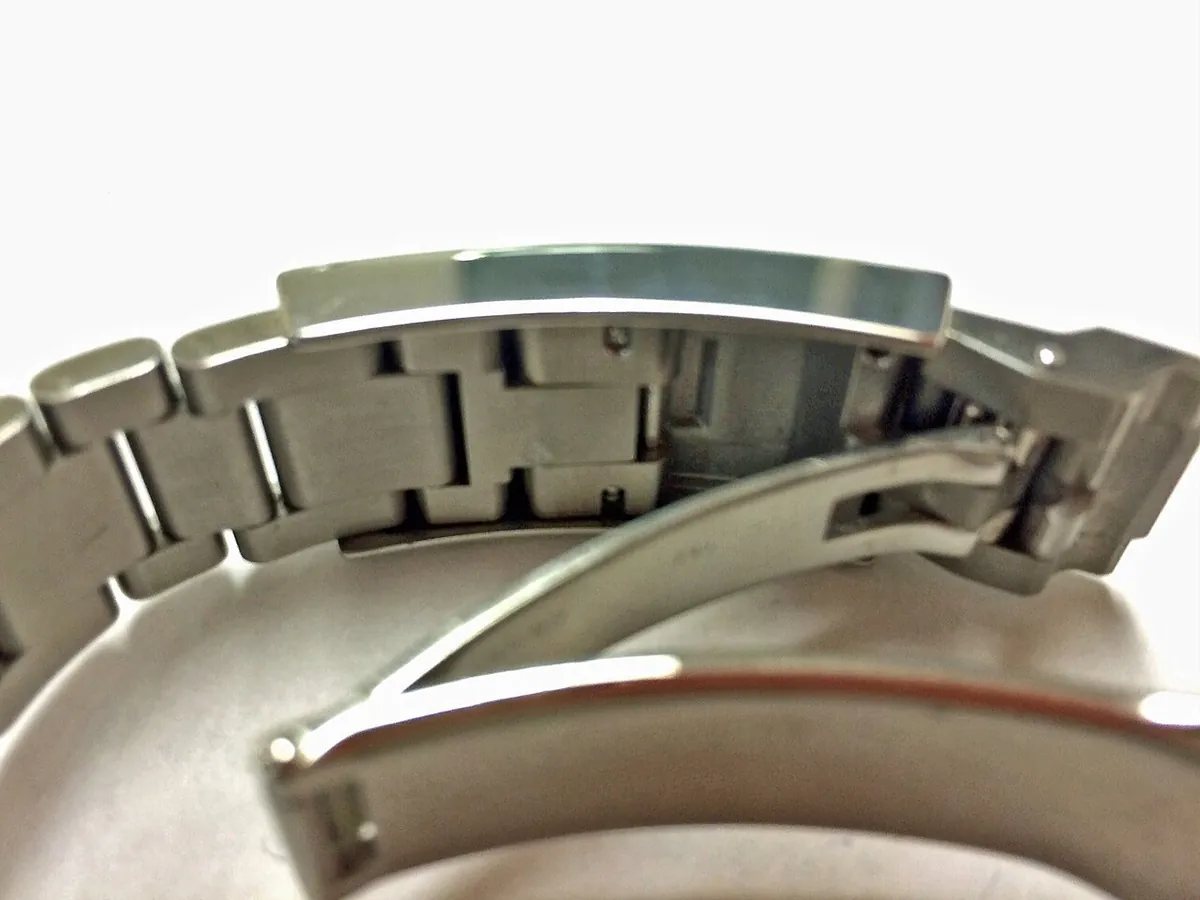
This guide covers each current bracelet and strap, every clasp system, end links, stretch, and how the bracelet type moves pre-owned prices. It finishes with practical authentication checks.
| Bracelet | Links | Typical clasp | Example | Character |
|---|---|---|---|---|
| Oyster | Three-piece, flat | Oysterlock or Oysterclasp | Submariner 126610LN | Sporty, robust |
| Jubilee | Five-piece | Concealed Crownclasp or Oysterlock | Datejust 126234 | Supple, dressier |
| President | Three-piece, rounded | Concealed Crownclasp | Day-Date 228238 | Gold or platinum only |
| Pearlmaster | Five-piece, rounded | Concealed Crownclasp | Pearlmaster 86348 | Jewellery-like |
| Oysterflex | Elastomer over metal blade | Oysterlock | Daytona 126515LN | Light, sporty |
| Flat Jubilee | Integrated, with ceramic inserts | Folding clasp | Land-Dweller 127334 | Integrated design |
| Leather strap | Alligator | Folding clasp | Perpetual 1908 52508 | Dress |
The main Rolex bracelet types in detail
Below, each of the Rolex bracelet types is described with the references that use it. Metal options vary by bracelet, so check the reference page for exact versions.
Oyster
The Oyster bracelet dates from the late 1930s. It uses three flat links per row, usually brushed, although Rolesor and some dress models have polished centre links. It is the default on sports models, such as the Explorer 40 and the Daytona 126500LN.
The Oyster is the toughest bracelet Rolex makes. Its wide, brushed links hide scratches well. However, it is also the stiffest, so it can feel heavy on a slim wrist.
Jubilee
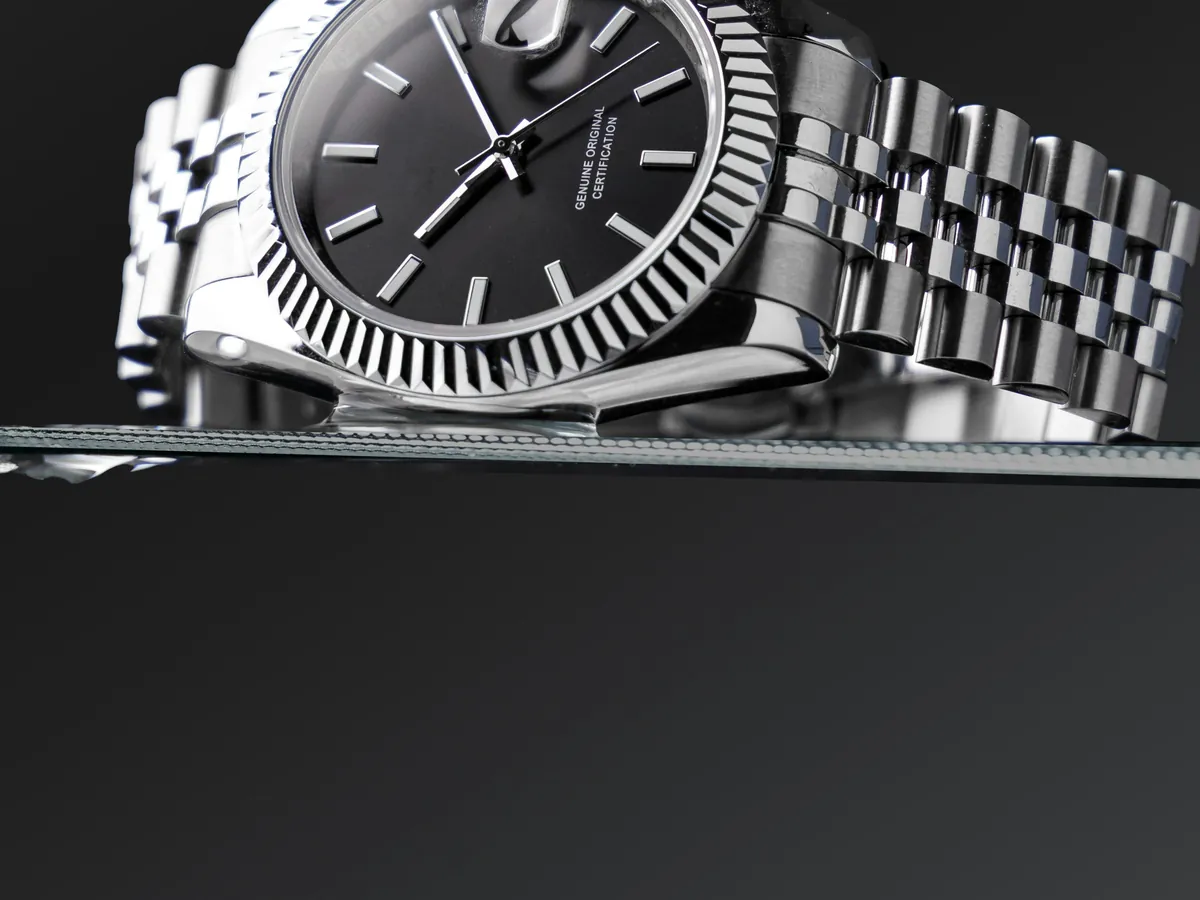
The Jubilee arrived in 1945 with the first Datejust. It uses five links per row: polished small centre links between brushed outer links. As a result, it drapes closely and catches light, which suits a fluted bezel.
Rolex has since put the Jubilee on sports models too. The steel GMT-Master II, for instance, comes on either bracelet. The Pepsi vs Batman comparison covers how that choice changed both references.
President
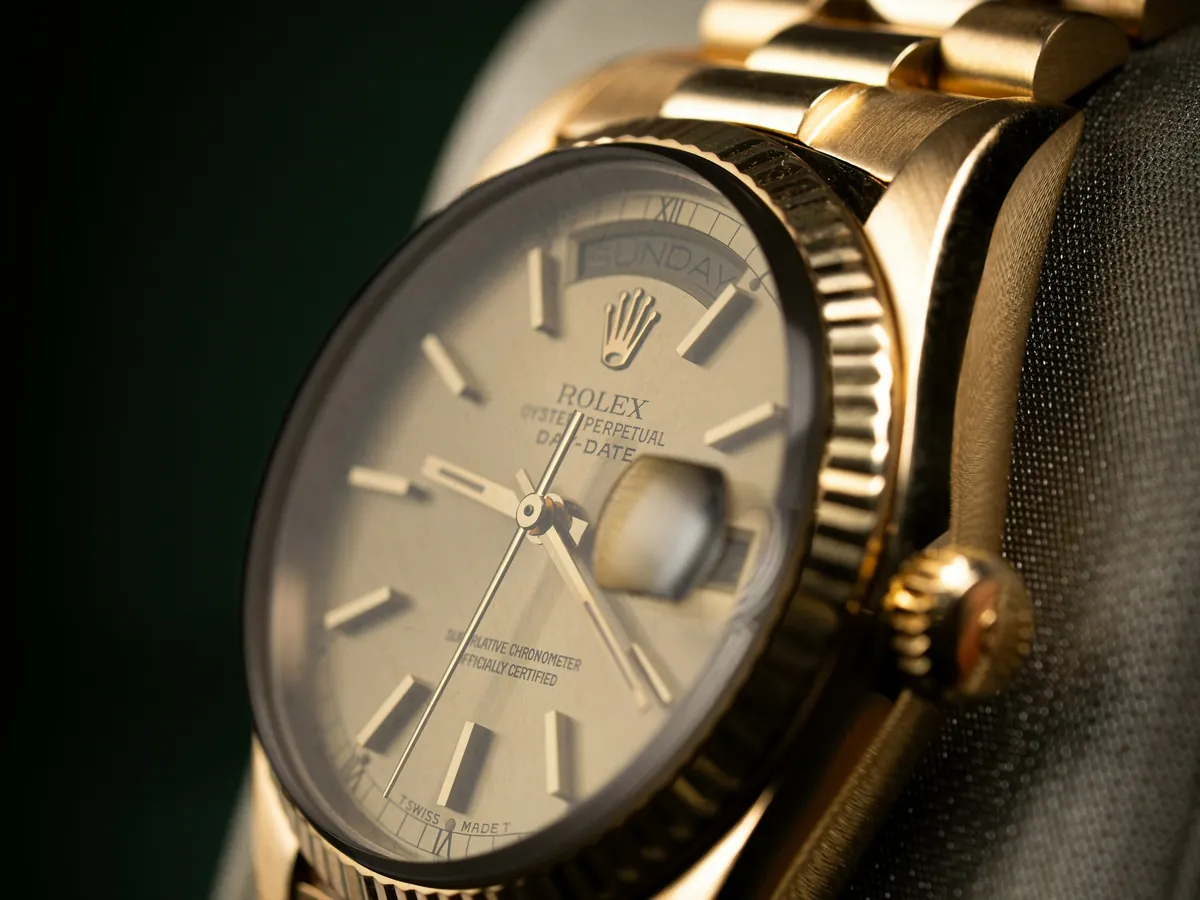
The President bracelet launched in 1956 with the Day-Date. It has three semi-circular links per row and comes only in 18 ct gold or platinum. In addition, it always uses a concealed Crownclasp, so the bracelet looks continuous. The Day-Date 36 vs 40 comparison shows how it wears on both sizes.
Pearlmaster
The Pearlmaster bracelet has five rounded links per row and appears on the Pearlmaster line. It is softer in shape than the Jubilee and is offered only in precious metals.
Oysterflex
Oysterflex debuted in 2015 on the Everose Yacht-Master. It reached the Daytona in 2017. Inside is a flexible titanium-nickel blade, over-moulded with black elastomer. A cushion system on the underside holds it steady on the wrist.
It is light and comfortable in heat, which makes sense in a Malaysian climate. Examples include the Yacht-Master 42 226659 and the Sky-Dweller 336239.
Flat Jubilee and leather
The Land-Dweller introduced a new integrated Flat Jubilee in 2025, with ceramic inserts between links. It cannot be swapped onto other models. Meanwhile, the 1908 dress line uses alligator leather straps with a folding clasp.
Rolex clasp types: Oysterclasp to Crownclasp
The clasp matters as much as the bracelet. It controls security, adjustment and, to some extent, comfort. Rolex uses five main systems, often in combination. Each of the Rolex bracelet types pairs with one or two of them.
| Clasp | What it does | Found on |
|---|---|---|
| Oysterclasp | Folding clasp with a single cover | Oyster Perpetual, Datejust on Oyster |
| Oysterlock | Folding clasp with a hinged safety lever | Submariner, GMT-Master II, Daytona, Explorer |
| Glidelock | Tool-free sliding extension, about 20 mm in 2 mm steps | Submariner, Sea-Dweller, Deepsea |
| Easylink | Fold-out 5 mm comfort extension | GMT-Master II, Daytona, Explorer, Datejust on Oyster |
| Crownclasp | Concealed folding clasp opened by a hinged coronet | Day-Date, Datejust on Jubilee |
Glidelock and Fliplock
Glidelock arrived in 2008 on the Deepsea. It lets you slide the bracelet along a toothed rail inside the clasp without tools. That makes it ideal for a wetsuit, or simply for a wrist that swells on a humid afternoon. The Deepsea Challenge 126067 also adds a Fliplock extension link for extra length.
Easylink and Crownclasp
Easylink is simpler: a hidden half-link that folds out to add about 5 mm. It is found on the GMT-Master II 126710GRNR, for example. The Crownclasp, by contrast, hides completely under the bracelet. You open it by lifting the small hinged coronet, so it is elegant but slightly fiddly.
Genuine: clasp and bracelet machining
- Crisp transitions between brushed and polished surfaces
- Clasp blade and logo cleanly milled, not stamped-looking
- Bracelet links tight, quiet, no rattle; screws not pins on modern pieces
Warning signs
- Polishing bleeds over brushed edges
- Fuzzy logo, uneven font, or stamped-in look
- Loose links, sharp burrs inside the clasp, cheap spring-loaded feel
End links and swapping bracelets
End links connect the bracelet to the case. Modern Rolex bracelets use solid end links machined to fit one case shape. Older bracelets often used hollow, folded end links, which rattle and bend more easily.
Not all bracelet types share end links, either. Each end link matches a specific case profile and lug width. For example, the 41 mm 126610LN uses a 21 mm bracelet, while the earlier 116610LN used 20 mm. So a bracelet from one generation will not simply fit the next. Gaps between end link and case, or end links that sit proud of the lugs, suggest a mismatched or aftermarket bracelet.
Can you swap types? Sometimes. Rolex sells many references on both Oyster and Jubilee, so the parts exist. However, fitting a bracelet Rolex never offered on that model makes the watch harder to sell. Always keep the original bracelet and all removed links.
Bracelet stretch and its effect on value
Stretch is wear, not literal stretching. Each link pivots on a pin, and over years the pins and holes wear. As a result, small gaps open between links, and the bracelet sags.
Of all the Rolex bracelet types, older ones with folded links stretch most. Five-digit Jubilee and Oyster bracelets from the 1980s and 1990s often show it clearly. Modern solid-link bracelets with screw pins and tubes resist it far better.
How to check stretch
- Hold the watch head with the dial facing up, with the bracelet hanging free.
- Lift the bracelet horizontally from the clasp end and watch for sag.
- A tight bracelet stays nearly straight; a stretched one droops in a curve.
- Look along the edge for uneven gaps between links.
- Check that link screws are not stripped or replaced with mismatched pins.
Stretch matters most on vintage and neo-vintage watches. A tight original bracelet on a Submariner 16610 is a clear plus, because a replacement costs real money at a service. The service and value guide explains what bracelet work adds to a bill.
How bracelet type moves pre-owned prices
Different Rolex bracelet types carry different values on the secondary market. The effect is real, although it is smaller than condition or papers. In practice, three patterns stand out across bracelet types.
First, bracelet choice at retail creates two versions of one reference. The 126710BLRO launched on a Jubilee in 2018, and the Oyster version followed in 2021. Buyers often have a firm preference, so check which version a price quote refers to.
Second, Oysterflex versus a gold bracelet changes the price ladder. The Everose 126515LN on Oysterflex lists at US$44,800 and trades at US$49,000 – US$53,000. The Everose 126505 on a solid gold Oyster bracelet lists at US$59,100 and trades at US$57,000 – US$63,500. In other words, the strap version costs less new and holds a premium, while the bracelet version trades near list.
Third, missing or damaged parts cost more than any style preference. A replacement clasp, end links or a full bracelet must be bought, and buyers discount accordingly. Our used Rolex price guide explains the condition bands.
Authenticating Rolex bracelets and clasps
Bracelets are a common weak point on fakes, and also on genuine watches fitted with aftermarket parts. So check the bracelet as carefully as the dial.
- Engravings: clasp markings should be deep, sharp and even. Laser-shallow or blurred text is suspect.
- Action: Glidelock should slide smoothly and lock positively; Crownclasp should snap shut with a clean click.
- Fit: end links should sit flush against the case, with no gaps or rattle.
- Finish: brushed and polished surfaces should meet in clean lines, with no burrs on link edges.
- Match: the clasp style must match the reference and era. A Crownclasp on a Submariner, for example, is wrong.
Genuine: clasp and bracelet machining
- Crisp transitions between brushed and polished surfaces
- Clasp blade and logo cleanly milled, not stamped-looking
- Bracelet links tight, quiet, no rattle; screws not pins on modern pieces
Warning signs
- Polishing bleeds over brushed edges
- Fuzzy logo, uneven font, or stamped-in look
- Loose links, sharp burrs inside the clasp, cheap spring-loaded feel
Clasp codes and dating
Older clasps also carry date codes and reference stamps. These should broadly agree with the watch's serial-number era. The serial number guide covers dating in detail.
Genuine: caseback
- Solid Oystersteel or gold, fluted edge for the case wrench
- No engraving on most models (some are factory-engraved, e.g. Sea-Dweller and Deepsea)
- Display backs are factory-fitted only on certain models (e.g. some Daytona, 1908, Land-Dweller)
Warning signs
- Exhibition window on a model Rolex makes with a solid back
- Stickers or decorative engravings sold as 'factory'
- Back that turns too easily or sits proud of the case
For the full process, read the real vs fake Rolex guide. Also see the materials guide, because bracelet metal affects weight and wear.
Rolex bracelet types FAQ
Oyster or Jubilee: which bracelet is more comfortable?
Most people find the Jubilee slightly more comfortable, because its five small links drape around the wrist more closely. The three-piece Oyster feels firmer and sportier, and it scratches less visibly thanks to its brushed links. On a GMT-Master II 126710BLNR you can choose either, so try both before you buy.
What is the Glidelock clasp?
Glidelock is Rolex's tool-free extension system inside the clasp of its dive watches. You lift the bracelet end and slide it along a rail, adjusting the length by roughly 20 mm in 2 mm steps. It lets a diver fit the watch over a wetsuit, and it helps any owner whose wrist swells in the heat.
Can you put a Jubilee bracelet on a Submariner?
Physically, yes, if you find a Jubilee with the correct end links and lug width for that case. However, Rolex has never offered a Submariner on a Jubilee, so it will look non-standard to buyers. Keep the original Oyster bracelet, because a Submariner without it sells for noticeably less.
Is Oysterflex rubber?
Not exactly. Oysterflex is a metal blade made of a titanium and nickel alloy, over-moulded with black elastomer, which is a high-performance rubber-like material. The inner surface has small cushions for comfort and grip. It behaves like a sporty rubber strap but keeps the security of a metal bracelet core.
Does bracelet stretch reduce a Rolex's value?
Yes, mainly on older watches. Visible stretch tells a buyer that the pins and links are worn, and many will budget for a replacement bracelet. On five-digit references with folded links, a tight original bracelet is worth a clear premium over a stretched one. Modern solid-link bracelets stretch far less.
How do I check a Rolex clasp for authenticity?
Look for crisp, deep engravings, a sharply defined coronet and smooth, precise action with no rattle. The extension system should glide or click positively. Compare the clasp style with the reference, because a mismatched clasp suggests replaced parts. Our real vs fake Rolex guide covers the full set of checks.
Last updated . Written and fact-checked by the Rolex Malaysian editorial team. Specifications and prices are re-checked quarterly.