Rolex retail vs market price: the short answer
Rolex sets one list price per country, and its authorised dealers (ADs) charge exactly that. The market price is what buyers pay everywhere else: grey dealers, private sellers, auctions and the Rolex Certified Pre-Owned programme. Most of the time the two are close. However, for a handful of steel sports models the market pays far more, and for most gold models it pays less.
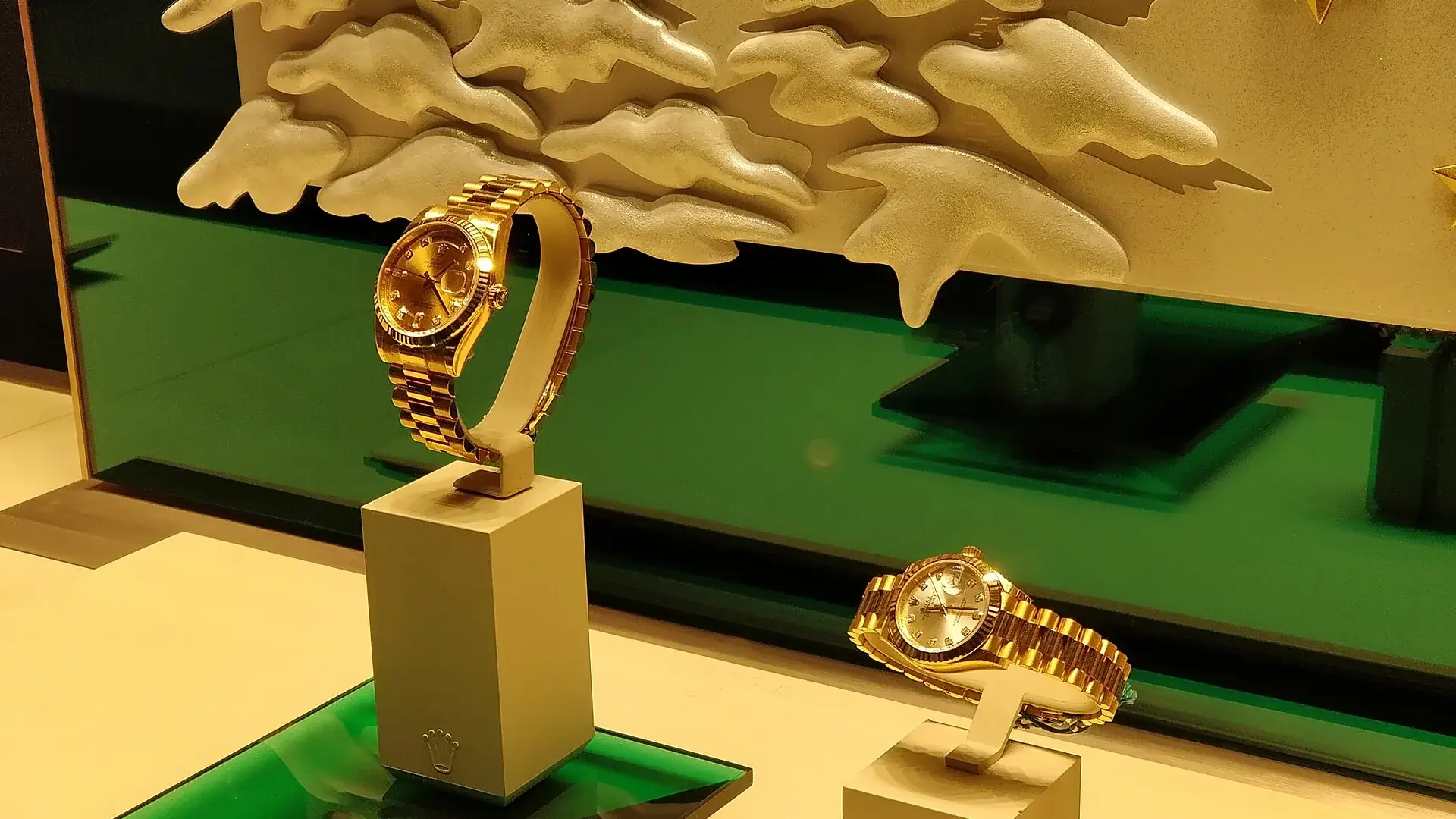
In October 2026, the steel Daytona 126500LN lists at US$16,900 but trades at US$31,000 – US$38,000 in excellent condition with papers. By contrast, the steel Explorer 36 trades at US$7,500 – US$8,700, right on its list price of US$7,900. This guide explains why, and what it means if you are buying.
Why retail and market prices diverge
A normal brand raises prices or production when demand jumps. Rolex does neither quickly. Instead, it raises list prices once a year by single-digit percentages and expands output slowly, because it makes most parts in-house. As a result, demand for the most wanted steel references runs ahead of supply for years at a time.
When an AD cannot meet demand, it rations. So the buyer who cannot wait turns to the secondary market, where price does the rationing instead. The gap between the two figures is, in effect, the cost of skipping the queue.
Demand is narrow, not universal
The premium applies to a small group of references. Typically, these are steel sports models with a long history, such as the Daytona, GMT-Master II and Submariner, plus anything newly launched or just discontinued. Meanwhile, the catalogue is full of models that ADs can sell from stock. Those trade at or below list, because no buyer needs to pay extra to get one.
List price is a floor for some models, not others
For high-demand steel, the list price acts as a floor. Few owners sell below what a new one costs, because buyers would snap it up. Precious-metal models behave differently. Their list prices are high, their buyers are fewer, and dealers can usually supply them. Consequently, a two-year-old gold watch competes with a new one at the AD, and its price drops to attract a buyer.
Waitlists and allocation in 2026
There is no official Rolex waitlist. Each AD keeps its own record of interested clients and decides who is offered each watch. In practice, dealers favour people with a purchase history, people they believe will wear the watch, and local clients they will see again.
Waits therefore vary widely. Dealer reports in 2026 suggest weeks for most dress and two-tone models, months for a steel Submariner or GMT-Master II, and an open-ended wait for a steel Daytona if you have no history. We treat these as indications, not promises, because no boutique publishes its list.
- Usually available: Explorer 36 and 40, Air-King, Datejust with common dials, Sea-Dweller, Yacht-Master 40 in Rolesium, most gold and two-tone models.
- Usually a wait: Submariner, GMT-Master II in steel, Explorer II, the new Land-Dweller.
- Allocated to known clients: steel Daytona, the Oyster Perpetual 41 "Centenary" 134303, and anything just discontinued.
Our first Rolex buying guide explains how to approach an AD without history, including the Malaysian dealers.
How the grey market works
The grey market is the legal trade in new and unworn watches outside the authorised network. Its stock comes from three places. First, private buyers who resell soon after an AD purchase. Second, traders who move watches between countries where list prices or demand differ. Third, owners trading in to buy something else.
A genuine grey-market Rolex still carries its original warranty card, dated by the AD that first sold it. The Rolex five-year guarantee runs from that date and stays with the watch, not the first owner. So a watch bought grey with a 2025 card still has around three years of cover left.
What you pay for, and what you risk
Grey dealers sell immediacy and choice. In return, you pay the going premium and accept more risk. The main risks are fakes from weaker sellers, "new" watches that have been worn, missing links or papers, and cards that do not match the watch. Therefore, check the card against the serial, and inspect the watch before paying.
Genuine: rehaut engraving alignment
- Each engraved crown and letter lines up with its minute marker
- Engraving is crisp, even in depth, and readable at 12 o'clock
- Serial number engraved on the rehaut at 6 on modern pieces
Warning signs
- Letters drift between markers as they go around the ring
- Shallow, sandy-looking or uneven engraving
- Serial at 6 printed rather than engraved, or wrong format
Genuine: cyclops magnification
- Date fills the lens edge to edge
- Numerals stay sharp right to the lens rim
- Lens sits centred over the date window
Warning signs
- Date looks small, with a visible margin
- Lens slightly off-centre or bubbled
- Strong blue anti-glare tint on top of the lens
Genuine: caseback
- Solid Oystersteel or gold, fluted edge for the case wrench
- No engraving on most models (some are factory-engraved, e.g. Sea-Dweller and Deepsea)
- Display backs are factory-fitted only on certain models (e.g. some Daytona, 1908, Land-Dweller)
Warning signs
- Exhibition window on a model Rolex makes with a solid back
- Stickers or decorative engravings sold as 'factory'
- Back that turns too easily or sits proud of the case
Rolex Certified Pre-Owned: the official middle ground
In December 2022, Rolex launched its Certified Pre-Owned programme with Bucherer in six European countries. It then opened the scheme to other official retailers from 2023. Each watch is checked by the retailer, serviced where needed, and sold with a new two-year Rolex guarantee.
In Kuala Lumpur, Rolex lists The Hour Glass as a Certified Pre-Owned retailer. Prices follow the secondary market rather than list, and they often sit at its upper end. Even so, for a first purchase of a high-premium reference, the guarantee removes the biggest risk in the grey market.
The 2022 peak and the correction since
Between 2020 and early 2022, secondary prices for steel Rolex rose faster than at any point in modern memory. Low interest rates, lockdown savings and crypto gains all fed demand. At the peak, a steel Daytona traded at around three times its list price.
The turn came in spring 2022. According to the price tracker WatchCharts, Rolex secondary prices had fallen about 31% from that peak by 2023. Rising interest rates and falling crypto prices removed speculative buyers, while Rolex kept raising list prices. Consequently, the premium on many references shrank from both ends at once.
Where we are in 2026
Prices have been broadly stable since 2024, with two pressures pushing them up. First, Rolex raised list prices again on 1 January 2026. Second, US list prices absorbed tariffs on Swiss imports, which were set at 39% in August 2025 and cut to 15% from November 2025. Higher list prices lift the floor of the secondary market, as the Submariner 124060 shows: its US list price has crossed US$10,050.
Discontinuation is the other driver. When Rolex retired the "Pepsi" GMT-Master II 126710BLRO in April 2026, its market price jumped. It now trades at US$25,000 – US$28,500 against a last list price of US$11,800.
Which references trade above and below retail now
The tables below show the current list price against our pre-owned bands. The final column is the mid-point of the "excellent, box and papers" band against list. For the full dataset, see our used Rolex prices guide.
Trading well above list
| Reference | Retail | Unworn, full set | Excellent, B&P | Good, no papers | Mid-band vs retail |
|---|---|---|---|---|---|
| Cosmograph Daytona 126500LN | US$16,900 | US$34,000 – US$41,800 | US$31,000 – US$38,000 | US$27,500 – US$33,000 | +104% |
| GMT-Master II 126710BLRO | US$11,800 | US$29,000 – US$34,000 | US$25,000 – US$28,500 | US$22,500 – US$25,000 | +127% |
| GMT-Master II 126710GRNR | US$11,800 | US$22,000 – US$24,500 | US$20,000 – US$22,800 | US$18,000 – US$20,000 | +81% |
| GMT-Master II 126710BLNR | US$11,800 | US$20,500 – US$23,000 | US$18,000 – US$20,500 | US$16,000 – US$18,000 | +63% |
| Oyster Perpetual 41 (100 Years) 134303 | US$9,650 | US$20,000 – US$27,500 | US$16,000 – US$22,000 | US$13,600 – US$20,200 | +97% |
| Land-Dweller 40 127334 | US$16,450 | US$29,000 – US$36,000 | US$23,000 – US$30,000 | US$19,600 – US$27,600 | +61% |
| Yacht-Master 42 RLX Titanium 226627 | US$16,050 | US$26,500 – US$29,000 | US$23,000 – US$27,000 | US$19,600 – US$24,800 | +56% |
| Submariner 124060 | US$10,050 | US$14,000 – US$15,500 | US$12,800 – US$14,500 | US$11,300 – US$12,500 | +36% |
| Submariner Date 126610LN | US$11,350 | US$15,500 – US$16,900 | US$14,000 – US$15,600 | US$12,300 – US$13,700 | +30% |
Retail is the current (or last) US list price. Pre-owned bands are rounded market ranges for October 2026; MYR ≈ USD × 4.08.
These are the references where the market price clearly exceeds retail. Note the pattern: steel or titanium, sporty, and either scarce or new. The Land-Dweller 127334 and titanium Yacht-Master 226627 show the "launch premium" that new models carry while supply builds.
Trading near list
| Reference | Retail | Unworn, full set | Excellent, B&P | Good, no papers | Mid-band vs retail |
|---|---|---|---|---|---|
| Explorer 36 124270 | US$7,900 | US$8,600 – US$9,700 | US$7,500 – US$8,700 | US$6,400 – US$8,000 | +3% |
| Air-King 126900 | US$8,150 | US$8,700 – US$9,800 | US$7,700 – US$8,800 | US$6,500 – US$8,100 | +1% |
| Explorer 40 224270 | US$8,350 | US$9,200 – US$10,500 | US$8,200 – US$9,300 | US$7,000 – US$8,600 | +5% |
| Datejust 36 126200 | US$8,150 | US$9,000 – US$10,500 | US$8,000 – US$9,500 | US$7,000 – US$8,200 | +7% |
| Datejust 41 126300 | US$8,950 | US$10,000 – US$12,000 | US$9,000 – US$10,800 | US$8,000 – US$9,300 | +11% |
| Yacht-Master 40 126622 | US$13,200 | US$14,500 – US$15,500 | US$13,200 – US$14,800 | US$11,200 – US$13,600 | +6% |
| Sea-Dweller 126600 | US$14,550 | US$14,500 – US$16,000 | US$12,500 – US$15,000 | US$11,000 – US$12,500 | -5% |
Retail is the current (or last) US list price. Pre-owned bands are rounded market ranges for October 2026; MYR ≈ USD × 4.08.
This group is where a buyer gets the fairest deal either way. For example, the Air-King 126900 and Datejust 36 126200 can be bought at an AD or pre-owned for about the same money. Our Air-King vs Explorer comparison looks at two of them side by side.
Trading below list
| Reference | Retail | Unworn, full set | Excellent, B&P | Good, no papers | Mid-band vs retail |
|---|---|---|---|---|---|
| Submariner Date 126613LB | US$19,450 | US$19,000 – US$21,500 | US$17,000 – US$19,500 | US$15,000 – US$16,800 | -6% |
| Datejust 41 126333 | US$16,900 | US$16,000 – US$18,000 | US$14,500 – US$16,500 | US$12,800 – US$14,500 | -8% |
| Explorer 36 Rolesor 124273 | US$14,600 | US$11,000 – US$12,500 | US$9,800 – US$11,500 | US$8,300 – US$10,600 | -27% |
| Day-Date 40 228239 | US$54,200 | US$47,000 – US$53,000 | US$42,000 – US$48,000 | US$37,000 – US$42,000 | -17% |
| Sky-Dweller 336239 | US$53,450 | US$39,000 – US$42,000 | US$35,000 – US$40,000 | US$29,800 – US$36,800 | -30% |
| Perpetual 1908 52509 | US$30,300 | US$24,000 – US$27,000 | US$20,700 – US$24,500 | US$17,600 – US$22,500 | -25% |
Retail is the current (or last) US list price. Pre-owned bands are rounded market ranges for October 2026; MYR ≈ USD × 4.08.
Gold and two-tone models make up most of this list. The Explorer 124273 in yellow Rolesor and the Sky-Dweller 336239 in white gold trade well below list. Therefore, a patient buyer of precious metal should look pre-owned first.
"Investment watch" claims, examined
Dealers often present Rolex as an asset class. That claim deserves scrutiny, because the numbers usually leave out costs.
- The dealer spread. A dealer buys below the price it sells at. So the price you can sell at today is lower than the asking prices you see online.
- Running costs. A full service roughly every ten years, plus insurance every year. Our service guide covers the costs.
- Survivorship. Headlines quote the Daytona and the Pepsi. They rarely quote a gold Day-Date bought new in 2022 and sold in 2026.
- The 2022 lesson. Buyers at the peak are still under water on many references, four years later.
- Allocation is not free. If an AD sells you a Daytona at list after you bought two other watches, those watches are part of the true cost.
The honest summary is narrower. A steel Rolex bought at list and worn for a decade often resells for close to what you paid, sometimes more. That is excellent value retention for a luxury object, but it is not an investment strategy. We make no forecasts here, and you should distrust anyone who does.
Malaysia vs Singapore vs US pricing
Rolex sets list prices by country, so comparing them means accounting for tax and exchange rates. Here is how the three markets Malaysian buyers compare most often actually work.
Malaysia
Malaysian list prices include sales tax. Since the revised Sales and Service Tax took effect on 1 July 2025, luxury watches carry the full 10% rate. There is also no tourist refund: Malaysia's refund scheme ended in 2018 along with GST. For example, the Submariner Date 126610LN lists at RM49,100, about US$12,000 at 4.08, against a US list of US$11,350.
Singapore
Singapore prices include 9% GST. A non-resident can reclaim it through the electronic Tourist Refund Scheme, but only when leaving by air from Changi or Seletar, and refund operators deduct a fee. Crucially, there is no refund when leaving by the Causeway or the Second Link. Full rules are on the IRAS tourist refund page.
Bringing a watch home
A Rolex is far above the personal allowance for returning Malaysian residents. Therefore, you must declare it at customs. Wrist watches currently attract no import duty but do attract the 10% sales tax on their value. In short, reclaiming 9% in Singapore and paying 10% at home usually leaves you slightly worse off. Confirm the current rules with the Royal Malaysian Customs Department before you travel.
United States
US list prices exclude state sales tax, which ranges from zero in a few states to around 10% in others. On paper, that makes some US prices the lowest of the three. However, the same Malaysian sales tax applies when you bring the watch home, and US ADs allocate scarce models to local clients just as strictly.
How to use this when buying
- Look up the reference's list price and pre-owned band on its page, for example the Datejust 41 126334.
- If the band sits near list, ask an AD first. You lose little by waiting a few weeks.
- If the band sits far above list, decide whether you value time or money more, then buy from a reputable dealer or the Certified Pre-Owned programme.
- If the band sits below list, buy pre-owned and check the warranty date.
- Whatever you buy, keep the full set. Our new vs used Submariner comparison shows what completeness is worth.
Retail vs market price FAQ
What is the Rolex waiting list?
It is an informal list an authorised dealer keeps of clients interested in models it cannot stock freely. Rolex does not run a central list, so each boutique has its own, and none is a queue in strict order. Dealers allocate by relationship and purchase history, which is why two people asking on the same day can wait very different lengths of time.
Are there any Rolex watches with no waitlist?
Yes. In 2026 most two-tone and gold models, the Explorer 36 and 40, Air-King, steel Datejusts with common dials, the Yacht-Master 40 in Rolesium and the Sea-Dweller are often available within weeks. Their pre-owned prices sit at or below list, which is the clearest sign that supply has caught up. Availability still varies by boutique and dial.
Can I avoid the Rolex waitlist?
Only by paying the market price. Grey dealers and private sellers will sell you a new or nearly new watch today, at a premium where demand exceeds supply. For references trading near list, the premium is small. For a steel Daytona it is roughly double retail. Rolex Certified Pre-Owned is another route, at a price closer to the grey market than to list.
Will an overseas AD put me on their waitlist?
Sometimes, but rarely for the most wanted steel models. Dealers in Singapore, Hong Kong or Europe prioritise local clients they will see again. A visitor is more likely to be offered what is in stock. If you do buy abroad, remember the tax at home: a Malaysian bringing a watch back must declare it and pay sales tax on its value.
What is the grey market for Rolex?
It is the legal trade in new or unworn watches outside Rolex's authorised network. Grey dealers source stock from private buyers who resell soon after purchase and from traders in other countries. The watches are usually genuine and carry the original dated warranty card, which remains valid. The risks are price, fakes from weaker sellers, and altered or incomplete sets.
Why do Rolex watches sell above retail?
Because Rolex sets list prices below what buyers will pay for certain steel sports models, and keeps supply steady rather than raising output or prices to meet demand. When a buyer cannot get a watch at an AD, the next best price is the secondary market. The premium is the cost of skipping the queue.
Is a Rolex a good investment in 2026?
Treat it as a purchase that may hold value, not as an investment. A few steel models resell above list, but secondary prices fell about 30% from the 2022 peak, and dealer margins, service costs and insurance eat into any gain. Most gold and two-tone models lose value at first. Buy one you want to wear.
How much did Rolex raise prices in 2026?
Rolex raised list prices on 1 January 2026. Malaysian dealer reports put steel models up roughly 2–7% and gold models roughly 5–14%. In the US, list prices also absorbed tariff pressure, which is why the Submariner 124060 now lists above US$10,000. Check the reference pages on this site for the current list price of each model.
Is it cheaper to buy a Rolex in Malaysia or Singapore?
Rarely by enough to matter. Singapore prices include 9% GST, refundable to tourists only when leaving by air. Malaysian prices include 10% sales tax. If you bring a Singapore watch home you must declare it and pay Malaysian sales tax on its value, which usually cancels the GST refund. Stock, not price, is the better reason to look south.
Last updated . Written and fact-checked by the Rolex Malaysian editorial team. Specifications and prices are re-checked quarterly.