Rolex materials explained at a glance
Rolex makes most of its own materials. It runs an in-house foundry for gold, and it gives proprietary names to its steel, gold and ceramic. Therefore, reading a spec sheet requires a small glossary. This guide puts the main Rolex materials, explained one by one, next to real references and real prices.
The table gives the short version. After it, each section covers what the material is, how it wears and how it moves the price on the secondary market.
| Material | What it is | Example | Scratches | Weight on wrist |
|---|---|---|---|---|
| Oystersteel | 904L-family stainless steel | Submariner 124060 | Like any steel | Medium |
| Rolesor | Oystersteel plus 18 ct gold | Datejust 126233 | Gold parts mark faster | Medium-heavy |
| Rolesium | Oystersteel plus 950 platinum bezel | Yacht-Master 126622 | Like steel | Medium |
| 18 ct gold | Yellow, white or Everose, 75% gold | Day-Date 128238 | Softer, marks easily | Heavy |
| 950 platinum | 95% platinum alloy | Day-Date 228236 | Smears rather than chips | Heaviest |
| RLX titanium | Grade 5 titanium alloy | Deepsea Challenge 126067 | Shows scuffs | Light |
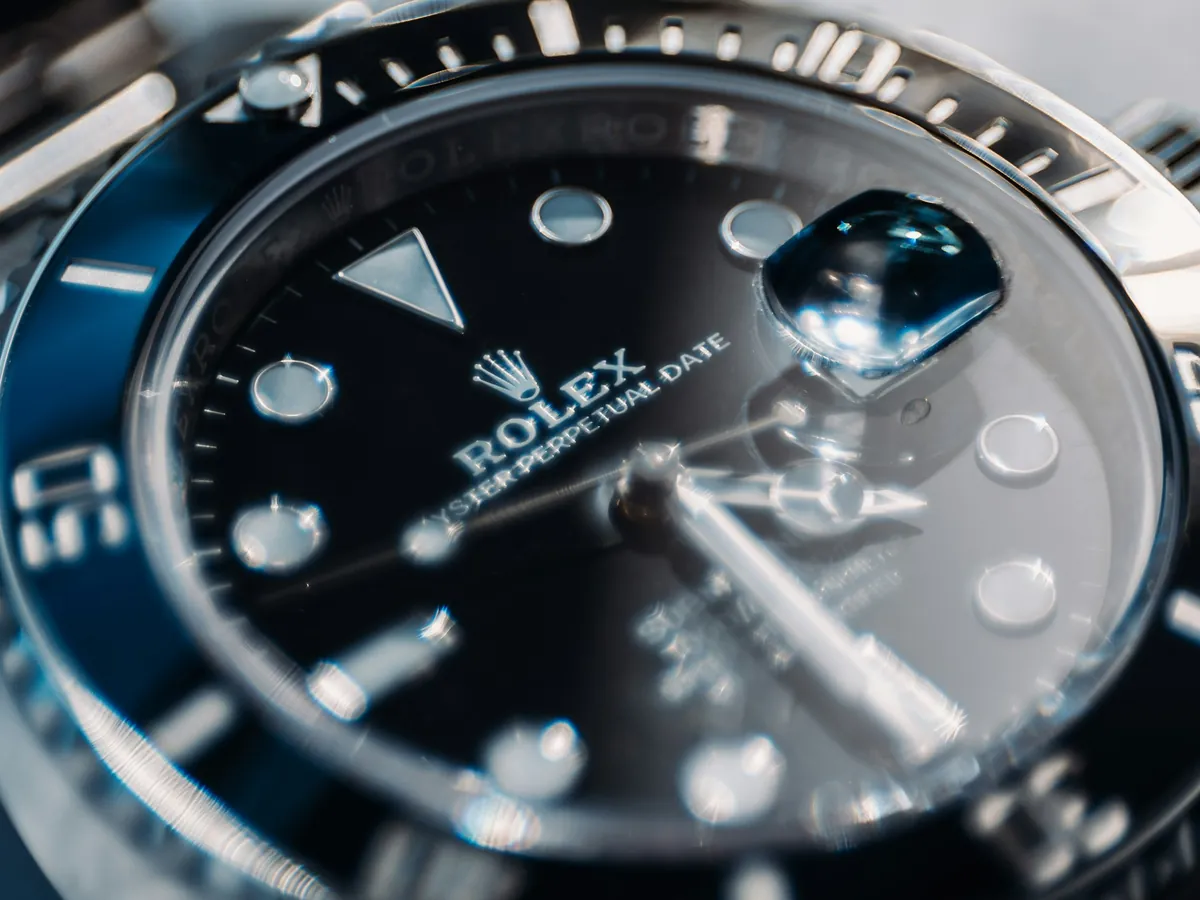
| Cerachrom | Zirconia ceramic (bezel inserts) | GMT-Master II 126710BLRO | Very resistant, can chip | n/a |
Oystersteel and 904L
Most watch brands use 316L stainless steel. Rolex instead moved to 904L steel in the 1980s, and from the late 2010s began calling its version Oystersteel. Rolex states that Oystersteel belongs to the 904L family of superalloys. So the change was a name, not a new metal.
The difference from 316L is chemistry. 904L carries more nickel, chromium and molybdenum, which improves resistance to corrosion and pitting. That matters for divers and for owners in humid, salty places such as coastal Malaysia. It also polishes to a slightly brighter, whiter lustre.
What Oystersteel does not do
Oystersteel is not harder than ordinary steel. In practice, a steel Rolex picks up desk-diving hairlines just as quickly as any other steel watch. Polished centre links show it first, while brushed surfaces hide it better.
For value, Oystersteel is the strongest material in the catalogue right now. For example, the 126610LN lists at US$11,350 and an excellent pre-owned set trades at US$14,000 – US$15,600. Similarly, the steel Daytona 126500LN lists at US$16,900 yet trades at US$31,000 – US$38,000. Demand, not the metal cost, drives those premiums. Of all the Rolex materials explained here, steel is also the cheapest to refinish at a service.
Rolesor, Everose Rolesor and Rolesium
Of the mixed materials explained in this guide, Rolesor is the oldest. It is Rolex's word for steel combined with gold. Rolex registered the name in 1933, although two-tone watches go back further. The formula is consistent: a gold bezel and crown, plus gold centre links on the bracelet.
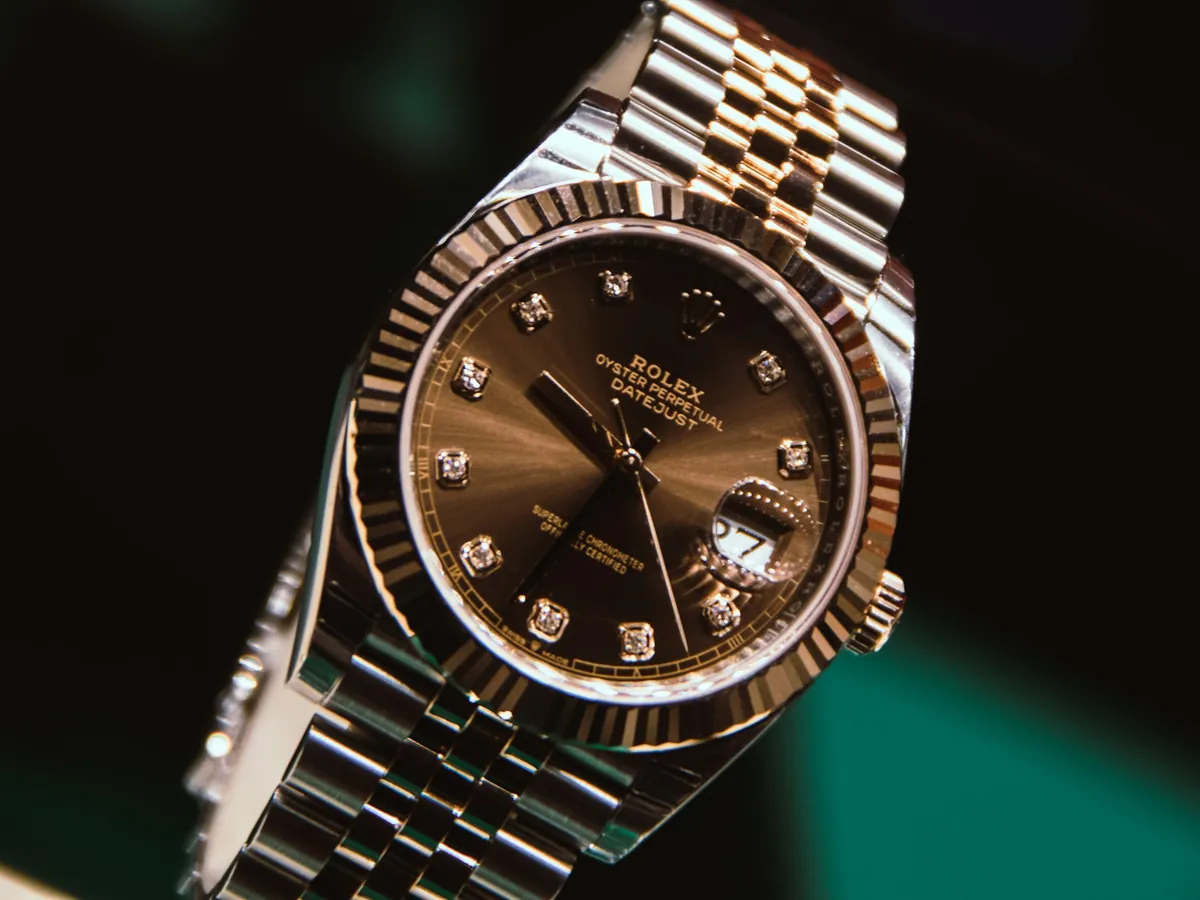
- Yellow Rolesor: the classic two-tone, as on the Datejust 126333 and the Submariner 126613.
- Everose Rolesor: steel with Everose gold, as on the GMT-Master II 126711CHNR "Root Beer".
- White Rolesor: steel with a white-gold bezel only, as on the Datejust 126334.
White Rolesor is the quiet value play. It looks almost like steel, yet the fluted bezel is solid 18 ct white gold. A Datejust 41 in White Rolesor lists at US$11,650, against US$8,950 for the smooth-bezel steel 126300.
Rolesium is the platinum equivalent. It pairs Oystersteel with a 950 platinum bezel, and it is used on the Yacht-Master 40 and 37. In addition, the matt platinum bezel resists scratches better than a polished gold one, because the sand-blasted surface hides marks.
How two-tone affects resale
Rolesor sits between steel and gold on the secondary market. The 126613 lists at US$19,450 and trades around US$17,000 – US$19,500 with papers. In other words, it trades near or slightly below retail, while the steel Submariner sells well above list.
18 ct yellow, white and Everose gold
Gold is the most familiar of the materials explained here, yet the details still matter. Rolex casts its own 18 ct gold, which means 75% pure gold by weight. The other 25% sets the colour and hardness. Yellow gold adds silver and copper; white gold adds palladium; Everose adds copper and a little platinum.
Everose arrived in 2005. Rolex designed it to keep its pink tone permanently, because older rose and pink golds could fade, particularly with exposure to chlorine. Examples from the late 2000s still look consistent today, which supports the claim.
How gold wears and weighs
Gold is softer than steel, so it marks more easily. A solid-gold President bracelet will show fine scratches within weeks of daily wear. However, many owners accept that, because the patina reads as normal use rather than damage.
Gold is also roughly twice as dense as steel. As a result, a full-gold Day-Date 40 or Daytona 126508 is substantially heavier than its steel equivalent. Some buyers love the heft. Others find it tiring on a small wrist.
Full gold usually trades below retail. Rolex prices gold well above metal value, and the pool of buyers is smaller. The ladder below shows the same Submariner in three metals, which makes the pattern easy to see.
| Reference | Retail | Unworn, full set | Excellent, B&P | Good, no papers | Mid-band vs retail |
|---|---|---|---|---|---|
| Submariner Date 126610LN | US$11,350 | US$15,500 – US$16,900 | US$14,000 – US$15,600 | US$12,300 – US$13,700 | +30% |
| Submariner Date 126613LB | US$19,450 | US$19,000 – US$21,500 | US$17,000 – US$19,500 | US$15,000 – US$16,800 | -6% |
| Submariner Date 126618LB | US$50,900 | US$46,500 – US$51,000 | US$42,000 – US$46,500 | US$37,500 – US$41,500 | -13% |
Retail is the current (or last) US list price. Pre-owned bands are rounded market ranges for October 2026; MYR ≈ USD × 4.08.
The full-gold 126618 lists at US$50,900 but trades at US$42,000 – US$46,500. So a buyer who is flexible on metal can save heavily by choosing pre-owned gold. Our Daytona steel vs gold comparison works through the same trade-off on the chronograph.
950 platinum
Among the materials explained on this page, platinum sits at the top of the Rolex catalogue. Rolex uses a 950 alloy, meaning 95% platinum. It is denser than gold, so a platinum Day-Date is the heaviest standard watch Rolex makes.
Platinum wears differently from gold. A knock tends to push metal aside rather than remove it, so scratches look like soft smears. Over time it develops a satin patina, and a light polish restores it with little material loss.
Rolex reserves an ice-blue dial for many platinum models, which makes them easy to identify. For value, platinum is mixed. The Daytona 126506 lists at US$84,600 and trades at US$114,000 – US$125,000, a clear premium. By contrast, the platinum Day-Date 36 128236 trades at US$58,000 – US$66,000 against a list of US$64,100.
RLX titanium
RLX titanium is the newest of the case materials explained here. It is Rolex's grade 5 titanium alloy. It debuted in 2022 on the Deepsea Challenge 126067, then reached a regular catalogue model with the Yacht-Master 42 226627. Rolex also uses it for the caseback of the Deepsea 136660.
Titanium is a little over half the density of steel. Consequently, a large titanium Rolex feels far lighter than its dimensions suggest. The finish is mostly satin-brushed and grey, which suits a tool watch. Still, titanium shows scuffs, and it needs specialist refinishing rather than a quick buff.
The 226627 has proved popular. It lists at US$16,050 and trades at US$23,000 – US$27,000, which suggests demand for a lighter Rolex is real.
Cerachrom ceramic bezels
Cerachrom is Rolex's name for its ceramic bezel inserts, made from zirconia. It first appeared in 2005 on a gold GMT-Master II. It replaced aluminium inserts, which faded in sunlight and scratched easily. Unlike the case materials explained above, it is used only for bezels and, recently, one dial.
Ceramic is extremely hard and its colour does not fade under UV light or seawater. The numerals are moulded into the insert and then coated with platinum or gold. In 2013, Rolex added a two-colour insert on the 116710BLNR "Batman", made from a single piece of ceramic. The red-and-blue 126710BLRO followed in steel in 2018.
Genuine: bezel action and alignment
- Divers' bezels: 120 firm, evenly spaced clicks, one direction only
- Pearl or triangle lands exactly on 12 at every full click
- No back-play or wobble when pressed
Warning signs
- Fewer or mushy clicks, or it turns both ways
- Triangle stops just short of or past 12
- Gritty feel and a hollow, high-pitched sound
The weakness is brittleness. A hard knock can crack an insert, and ceramic cannot be polished back. For collectors, that permanence cuts both ways. A ceramic bezel will never develop the faded "ghost" look that makes some aluminium inserts on the 16610 desirable.
Chromalight lume and sapphire crystal
Two more materials matter on nearly every modern Rolex: the luminescent coating and the crystal. They are the materials explained least often by dealers, yet buyers see them every day.
Chromalight
Chromalight is Rolex's blue-glowing lume, introduced in 2008. It glows for longer than the earlier green Luminova, and Rolex quotes up to around eight hours of useful legibility. Before the late 1990s, Rolex used radioactive tritium, which ages to a cream colour and can no longer be recharged.
Genuine: lume colour and application
- Modern pieces glow blue (Chromalight) and stay bright for hours
- Every marker and hand glows at the same intensity
- Lume plots filled neatly to the edge of the surround
Warning signs
- Green or mixed-colour glow on a modern reference
- Hands and markers fade at different rates
- Overfilled or thin, lumpy plots under a loupe
Sapphire crystal
Rolex has fitted synthetic sapphire crystals since the late 1970s. Sapphire is second only to diamond in hardness, so it resists scratches in daily wear. However, it can chip at the edge if struck at an angle. The cyclops over the date magnifies about 2.5 times.
Genuine: cyclops magnification
- Date fills the lens edge to edge
- Numerals stay sharp right to the lens rim
- Lens sits centred over the date window
Warning signs
- Date looks small, with a visible margin
- Lens slightly off-centre or bubbled
- Strong blue anti-glare tint on top of the lens
Modern crystals also carry a tiny laser-etched coronet near six o'clock. The real vs fake Rolex guide shows how to find it.
Choosing a material: which one suits you
With the Rolex materials explained, the choice becomes practical. Think about how you wear a watch, not just how it looks in a shop.
- Daily wear, best resale: Oystersteel, ideally a sports model such as the Explorer 40.
- Dressier, modest premium: White Rolesor or Rolesium, which look like steel but carry precious-metal bezels.
- Statement and weight: 18 ct gold, ideally bought pre-owned below retail.
- Light and sporty: RLX titanium.
For a first purchase, the first Rolex buying guide covers sizing and budget. Also, the bracelet guide explains how each metal affects bracelet stretch, while the service guide covers refinishing costs.
Rolex materials explained: FAQ
Is Oystersteel the same as 904L?
What does Rolesor mean?
Rolesor is Rolex's name for a watch that combines Oystersteel with 18 ct gold, registered as a trademark in 1933. Yellow Rolesor and Everose Rolesor use a gold bezel, crown and bracelet centre links. White Rolesor is subtler: only the bezel is white gold, as on the Datejust 126234.
Does Everose gold fade?
Rolex says no. Everose is its own 18 ct pink gold alloy, introduced in 2005, with a small amount of platinum added to stabilise the colour. Older pink and rose golds could lose their warmth over time, especially after chlorinated water. Everose was designed to avoid that, and early examples still look consistent.
Is a Cerachrom bezel scratch-proof?
It is highly scratch-resistant, not scratch-proof. Everyday contact with desks, door frames and metal rarely marks it. However, ceramic is brittle, so a sharp knock on a hard edge can chip or crack the insert. Cracked inserts cannot be polished out and must be replaced at a service.
Which Rolex material holds its value best?
Of the materials explained in this guide, Oystersteel sports models have held value best in recent years. Many still trade above retail, while full-gold references often sell below their list price. For example, a yellow-gold 126618 trades under retail while the steel version trades above it. Platinum is the exception at the top, led by the Daytona.
Is RLX titanium lighter than steel?
Yes, noticeably. Grade 5 titanium is a little over half the density of steel, so a full-titanium watch such as the Yacht-Master 42 226627 feels much lighter than its size suggests. The trade-off is a grey, satin look that shows scuffs, although it can be refinished.
Last updated . Written and fact-checked by the Rolex Malaysian editorial team. Specifications and prices are re-checked quarterly.