Rolex service cost at a glance
Most owners ask two questions first: how much, and how often. The short answer is that a modern Rolex needs a full service about once a decade. That service usually costs between US$800 and US$1,800 at an official centre, depending on the movement. However, the bill is only part of the story. A careless service can quietly remove thousands from the resale value of the watch.
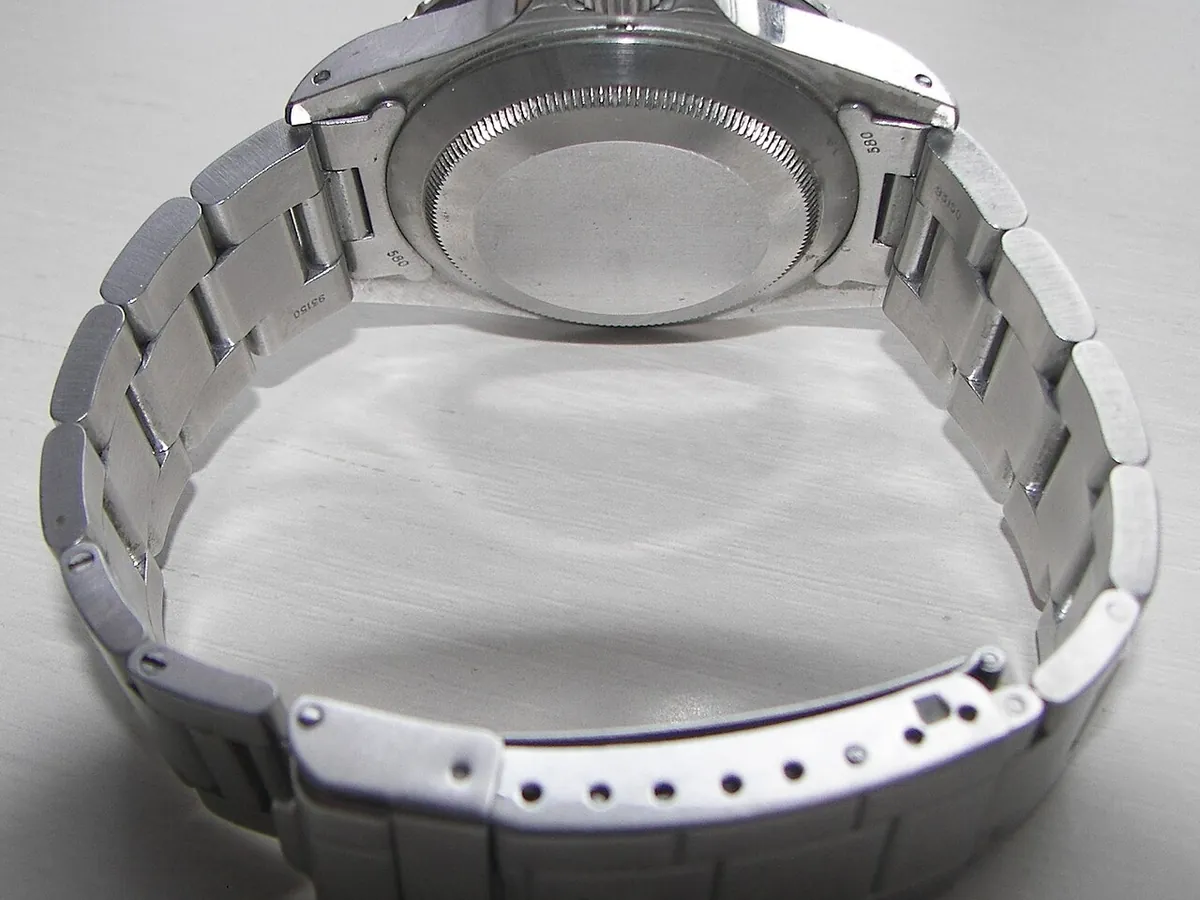
This guide explains both sides. First, it covers intervals, what the work includes and the realistic Rolex service cost. Then it explains how polishing, replacement parts and paperwork change the price you will get later. The figures below are typical ranges, not a price list. Costs vary by country, by model and by condition.
| Watch type | Examples | Typical USD | Approx. RM at 4.08 |
|---|---|---|---|
| Time-only or date | Oyster Perpetual 126000, Datejust 126300 | $800–1,100 | RM3,260–4,490 |
| Dive and GMT models | Submariner 126610LN, GMT-Master II 126710BLNR | $900–1,200 | RM3,670–4,900 |
| Chronograph | Daytona 126500LN | $1,200–1,800+ | RM4,900–7,340+ |
| Annual calendar or complicated | Sky-Dweller 336934 | Quote only | Quote only |
These ranges come from published US dealer and service-centre figures. They exclude a new crystal, bezel insert, dial, hands or bracelet parts, which can each add hundreds of dollars.
How often a Rolex needs servicing
Rolex now suggests a service roughly every 10 years for its current watches. It also says the right interval depends on the model and on how you wear it. That guidance arrived alongside the five-year international guarantee introduced in 2015.
The longer interval is credible for modern calibres. For example, the 3230 in the Submariner 124060 and the 3235 in the Datejust 41 use the Chronergy escapement, a Parachrom hairspring and newer lubricants. Those parts age more slowly than the oils and springs of the 1990s.
By contrast, older calibres were designed around shorter cycles. A 3135 in a Submariner 16610 or a 3035 in an earlier Datejust was typically serviced every five to seven years. Therefore, do not apply the 10-year rule to a 25-year-old watch just because it still runs.
Signs your watch needs a service now
- The rate drifts beyond about 10 seconds a day, when it used to sit within a few.
- The power reserve falls well short of the rated figure after a full wind.
- The crown feels gritty, or the screw-down threads catch.
- The date changes slowly, or hangs halfway around midnight.
- You see mist under the crystal after a shower or a swim.
Moisture is the urgent one. Water inside a case rusts steel parts quickly, and that turns a routine service into an expensive repair.
What a full Rolex service includes
An official service is a complete overhaul rather than a quick clean. The sequence below is what Rolex service centres describe, and what a good independent should match.
- Inspection and quote: the watch is checked for rate, amplitude and water resistance, and you approve a written estimate.
- Disassembly: the movement comes out of the case and is stripped down completely.
- Cleaning: every component goes through ultrasonic cleaning baths.
- Parts replacement: worn wheels, springs and the mainspring are replaced as needed, using genuine Rolex parts.
- Lubrication and reassembly: the movement is oiled at dozens of points and rebuilt.
- Regulation: the rate is adjusted in several positions and checked against Rolex's own precision standard.
- Case and bracelet: gaskets are replaced, and the case and bracelet are refinished unless you ask otherwise.
- Testing: water resistance is pressure-tested and the watch runs for several days before release.
What the two-year service guarantee covers
After an official service, Rolex gives a two-year guarantee on the work. That covers the functions serviced, not accidental damage or a cracked crystal. Also, if your watch is still inside its five-year warranty, the movement repair itself should be covered. Even so, refinishing and wear parts may still be charged.
Genuine: caseback
- Solid Oystersteel or gold, fluted edge for the case wrench
- No engraving on most models (some are factory-engraved, e.g. Sea-Dweller and Deepsea)
- Display backs are factory-fitted only on certain models (e.g. some Daytona, 1908, Land-Dweller)
Warning signs
- Exhibition window on a model Rolex makes with a solid back
- Stickers or decorative engravings sold as 'factory'
- Back that turns too easily or sits proud of the case
What drives the Rolex service cost up
The base service cost covers labour, cleaning and standard movement parts. However, few watches leave the bench at the base fee. The common extras are predictable, so ask about each one before you approve the quote.
- Crystal: a chipped sapphire or a cyclops with scratched coating is replaced rather than polished.
- Bezel insert: a cracked Cerachrom insert must be replaced as a part.
- Dial and hands: vintage lume that has degraded may be swapped, which matters for value (see below).
- Crown and tube: worn threads are a common replacement on daily-worn divers.
- Bracelet: stretched links, worn pins or a tired clasp add cost quickly, especially in gold.
Complications raise the service cost as well. A Daytona chronograph has more parts to strip and regulate than a three-hand watch. Likewise, an annual-calendar Sky-Dweller is quoted individually. So the Rolex service cost on a gold chronograph can be several times that of a steel Oyster Perpetual.
Rolex service in Malaysia
Rolex lists an official service centre in Kuala Lumpur at Menara Generali, 27 Jalan Sultan Ismail. It opens on weekdays, and Rolex recommends booking an appointment through its local booking site. Authorised retailers in Kuala Lumpur can usually accept a watch and forward it, although that adds time.
Rolex Malaysia does not publish its service costs. As a rough guide, owners on the Lowyat forum reported paying around RM2,200 to RM2,400 for a basic Datejust service in 2021 and 2022, with no parts replaced. Prices have risen since, so treat those figures as a floor. Always get the written quote first.
Official Rolex service centre vs independent watchmaker
The choice is less obvious than it looks. An official centre gives a known standard and a Rolex service record. A good independent, by contrast, may be cheaper, faster and more willing to preserve original parts.
| Factor | Official service centre | Independent watchmaker |
|---|---|---|
| Typical cost | Higher; fixed fee plus parts | Often 30–50% lower for labour |
| Parts | Genuine only, always available | Depends on access to genuine parts |
| Polishing | Standard unless you decline | Usually your choice |
| Original vintage parts | May replace non-compliant dials, hands or inserts | More likely to keep them |
| Paperwork | Rolex service guarantee | Workshop receipt only |
| Warranty impact | Keeps any remaining guarantee | Ends any remaining guarantee |
When an independent makes sense
For a watch inside its five-year guarantee, use Rolex. For a modern watch out of warranty, either route works, provided the independent can source genuine parts. Rolex restricts its parts supply, so ask directly rather than assume.
For vintage references, an experienced independent is often the better choice. That is because collectors pay for original dials, hands and bezel inserts, and an official centre may replace them as standard. If you do use Rolex for a vintage piece, state in writing which parts must not be changed.
Polishing and its effect on value
Polishing is the service step that most affects resale. Every polish removes metal. As a result, sharp lug edges round off, the bevel between brushed and polished surfaces blurs, and lug holes on older cases start to look shallow.
The market prices this clearly. For example, our current band for an excellent 126610LN with box and papers is US$14,000 – US$15,600. A polished or modified example sits at US$10,800 – US$12,300. On a five-digit 16610, the gap widens: US$10,500 – US$12,800 for an excellent example against US$7,500 – US$8,800 once polished. The five-digit vs six-digit Submariner comparison explains why case condition matters so much on older references.
How to spot a polished case
- Lug tops: the brushed surface should meet the polished flank in a crisp, straight line.
- Bevels: polished chamfers along the lug edges should be even in width on both sides.
- Lug holes: on drilled cases, the holes should be sharp-edged, not dished.
- Engravings: the serial and model numbers between the lugs should be deep and clean.
A light, skilled refinish is not a disaster on a modern daily wearer. However, a second or third heavy polish shows, and buyers discount it.
Service dials, hands and bezels: how replaced parts change value
On a modern watch, replacement parts are neutral. A new crown on a 2019 Submariner changes nothing. On a vintage or neo-vintage watch, however, originality is a large part of the price.
The classic case is lume. Watches from before about 1998 used tritium, which ages to a cream or brown tone. Official centres have historically fitted service dials and hands with modern luminous material instead. The watch then looks fresher, but collectors pay less, because the matching aged patina is gone.
Bezel inserts follow the same logic. A faded aluminium insert on a GMT-Master II 16710 or a Submariner 16610 can be worth more than a bright new one. In particular, colour-faded Pepsi and Kermit inserts are traded as collectables in their own right.
Genuine: lume colour and application
- Modern pieces glow blue (Chromalight) and stay bright for hours
- Every marker and hand glows at the same intensity
- Lume plots filled neatly to the edge of the surround
Warning signs
- Green or mixed-colour glow on a modern reference
- Hands and markers fade at different rates
- Overfilled or thin, lumpy plots under a loupe
Genuine: bezel action and alignment
- Divers' bezels: 120 firm, evenly spaced clicks, one direction only
- Pearl or triangle lands exactly on 12 at every full click
- No back-play or wobble when pressed
Warning signs
- Fewer or mushy clicks, or it turns both ways
- Triangle stops just short of or past 12
- Gritty feel and a hollow, high-pitched sound
Service papers and what they add
Paperwork from a service is useful evidence. An official service leaves a dated receipt and a service guarantee card or record. Together, they show when the movement was overhauled and that the case passed a pressure test.
For buyers, that record answers the biggest hidden-cost question. A watch serviced last year will not need another Rolex service cost for many years, so it is worth more than an identical piece that is overdue. Still, service papers do not replace the original warranty card. The box and papers guide explains how the two documents work together.
Read the paperwork closely. Check that the serial number on the receipt matches the watch, then note which parts were replaced. A receipt listing "dial, hands, bezel insert" on a vintage piece tells you exactly what originality was lost. Also, use the serial number guide to confirm the dates make sense.
Budgeting service into a pre-owned purchase
When you buy pre-owned, treat the next service as part of the price. In practice, a watch with no record and a 15-year-old warranty card should be priced as if a full service is due.
- Ask for any service history and check the dates against the warranty card.
- Time the watch over two or three days, or ask the seller for a timegrapher reading.
- Check that the crown screws down smoothly and the date changes cleanly.
- If no recent service is documented, deduct the expected service cost from your offer.
- Compare the result against the bands in our used Rolex price guide.
Finally, a service centre is also a reliable authentication check. Rolex will not service a watch it identifies as counterfeit, and a centre will flag non-genuine parts. For the checks you can do before buying, see the real vs fake Rolex guide. Also, the bracelet and clasp guide covers stretch, which is one of the most common add-ons at service.
Rolex service cost FAQ
How much does a Rolex service cost?
At an official Rolex service centre, a time-only or date model such as a Submariner or Datejust is commonly quoted at about US$800 to US$1,200 before extra parts. A Daytona chronograph usually runs higher, often US$1,200 to US$1,800 or more. In Malaysia, owners reported about RM2,200 to RM2,400 for a basic Datejust service in 2021 and 2022. Expect more today.
How often should a Rolex be serviced?
Rolex's current guidance is roughly every 10 years for modern watches, depending on the model and how you wear it. That applies best to recent calibres such as the 3230 and 3235. Older five-digit references and vintage pieces were designed around shorter intervals, so plan on five to seven years for those, or sooner if the rate drifts.
Does polishing a Rolex reduce its value?
Usually, yes. Each polish removes metal and softens the sharp lug edges and bevels that collectors check first. On a modern steel sports model the difference is typically 10 to 20 percent. On vintage references it can be far larger. A light, skilled refinish is less damaging than a heavy one, but unpolished always sells best.
Where is the Rolex service centre in Malaysia?
Rolex lists its Kuala Lumpur service centre at Menara Generali, 27 Jalan Sultan Ismail. It opens on weekdays, and Rolex asks customers to book an appointment first. Authorised retailers can usually accept a watch and forward it, although that adds handling time. Check Rolex's listing for current hours.
Does servicing affect Rolex value?
A documented service generally helps, because a buyer knows the movement is healthy and water resistance was tested. However, a service that polishes the case or swaps an original vintage dial can reduce value. So the paperwork adds confidence, while the work itself must be specified carefully. Ask for no polishing and for old parts to be returned.
Does an independent service void the Rolex warranty?
Opening the watch outside the Rolex network during the five-year guarantee generally ends that guarantee. After it expires, a skilled independent is a reasonable choice for many owners. Still, Rolex restricts parts supply, so confirm the watchmaker can source genuine components before you hand the watch over.
How long does a Rolex service take?
Plan on several weeks rather than days. Turnaround depends on the centre's workload and on whether parts must be ordered from Geneva. Chronographs and watches needing a new dial, bezel or bracelet parts usually take longer. Ask for an estimate when you approve the quote, and keep the receipt safe.
Last updated . Written and fact-checked by the Rolex Malaysian editorial team. Specifications and prices are re-checked quarterly.