How used Rolex prices actually work
A Rolex has three prices at any moment. First, there is the list price at an authorised dealer (AD). Second, there is the asking price on marketplaces and dealer websites. Third, there is the price a watch actually changes hands at. Used Rolex prices sit in the gap between the second and third numbers, and that gap is where buyers overpay.
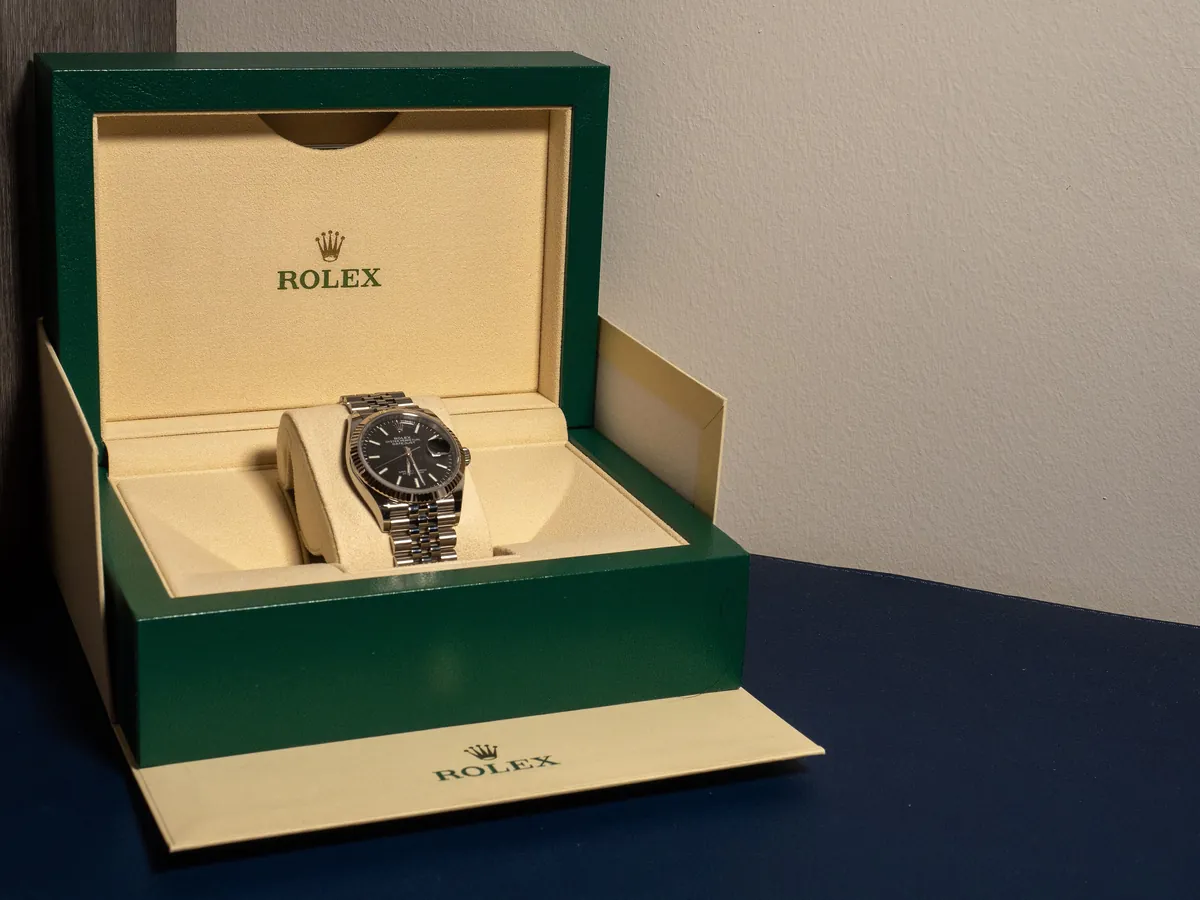
The list price matters less than most people think. For popular steel models, the AD price is only available after a long wait, so the real market is the secondary one. For precious-metal models, by contrast, the AD price is often the ceiling, and worn examples trade well below it. Our retail vs market price guide explains why that split exists.
So the useful question about used prices is not "what does Rolex charge?" Instead, ask "what does this exact reference, in this exact condition, with these exact accessories, sell for this month?" The rest of this guide answers that question step by step.
Where our numbers come from
Every reference page on this site carries four price bands, last checked in October 2026. The "excellent with box and papers" band is anchored on Chrono24 asking-price quartiles, current dealer listings and, where available, WatchCharts market data. The other three bands are derived from it using typical market discounts. In other words, our bands describe asking prices, not hammer prices. Treat the lower half of each band as the realistic target for a careful buyer.
US dollar figures are converted to ringgit at 4.08 MYR per USD, the mid-market rate on 12 October 2026. Malaysian list prices, where shown, are the official ringgit prices rather than conversions. We do not sell watches, take commissions or run listings, so there is no stock for us to push.
Condition grades: the four bands that set used Rolex prices
Dealers grade watches loosely, which makes used prices hard to compare. One shop's "mint" is another's "excellent", so we use four fixed bands on every product page. They combine physical condition and completeness, because buyers price the two together. The table summarises them, and the sections below define each grade precisely.
| Grade | What it means | Typical price vs "excellent, B&P" |
|---|---|---|
| Unworn, full set | Never worn, factory stickers usually intact, every accessory, recent dated warranty card | About 7–13% higher (more for hot new releases) |
| Excellent, box & papers | Light wear only, unpolished or factory-refinished case, original box and warranty card | The reference point |
| Good, no papers | Normal wear, may have been serviced, no warranty card (box may also be missing) | About 10–15% lower |
| Polished or aftermarket | Heavily polished case, or any non-Rolex part, or a mismatched/replaced component | About 20–25% lower |
Unworn, full set
This grade means the watch has not been sized or worn. Typically, the protective stickers are still on the caseback and clasp, the bracelet has all its links, and the box, outer box, booklets, hang tag and warranty card are present. The warranty card should be dated within the last year or two. That date matters, because the five-year Rolex guarantee runs from the date on the card. A 2026 card therefore sells for more than a 2022 card on the same watch.
Excellent, box and papers
This is the grade most listings claim and the one we use as our anchor. Expect fine hairlines on the clasp and bracelet, but sharp case edges and crisp brushed-to-polished transitions on the lugs. The original box and warranty card are present. A service by Rolex is fine here, since Rolex refinishes cases carefully. However, an independent polish that has rounded the edges pushes the watch down a grade.
Good, no papers
Here the watch is honest and genuine but either visibly worn or missing its warranty card. Missing papers do not mean a watch is fake. Still, they remove the easiest proof of origin and of the purchase date, so buyers discount them. Our box and papers guide explains which items matter most and how to replace them.
Polished or aftermarket
This bottom band covers two separate problems. The first is over-polishing: soft, rounded lugs and thin bevels that cannot be restored. The second is any non-Rolex part, such as an aftermarket diamond bezel, a refinished dial, a replacement bracelet or a generic crystal. Many buyers will not touch these watches at all, so the discount is steep and resale is slow. If the price looks attractive, assume you will face the same discount when you sell.
Which collections trade above and below retail
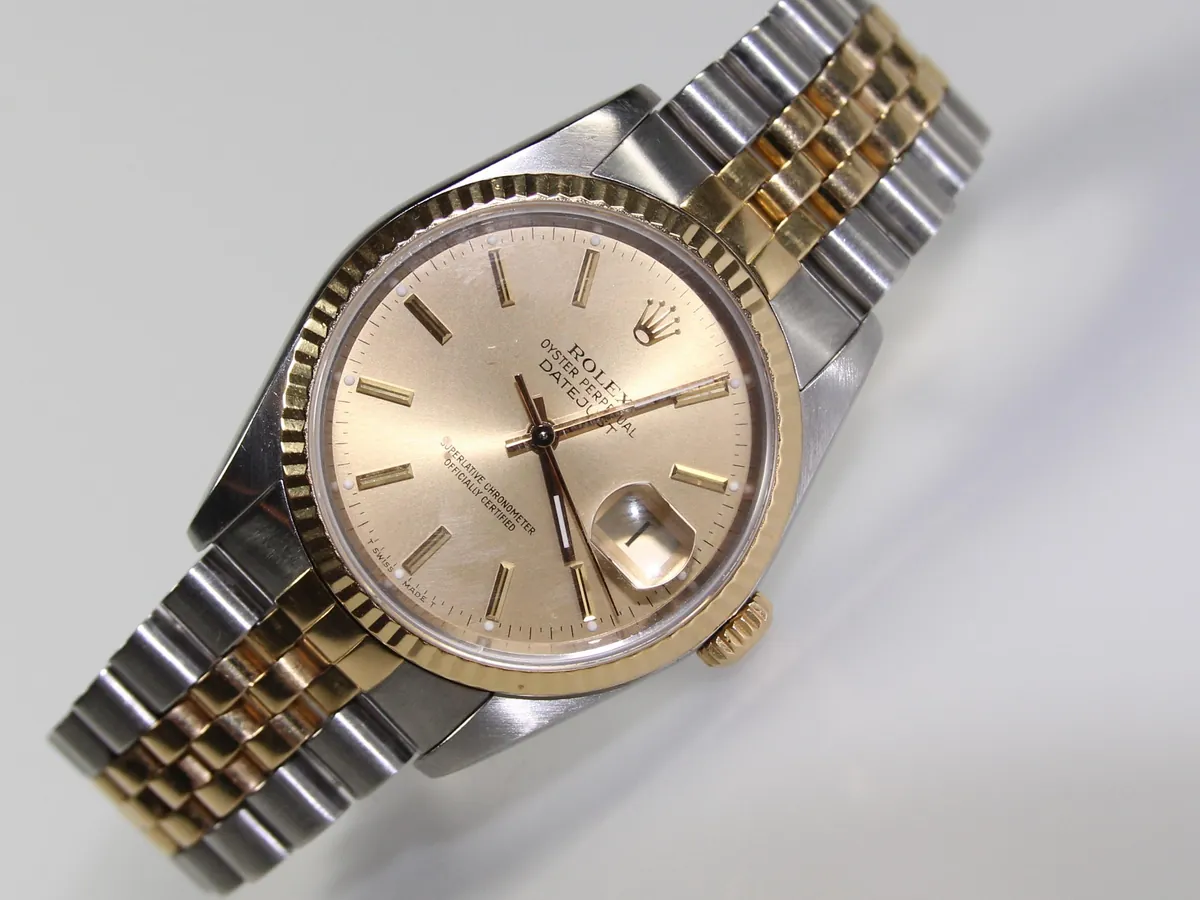
Used Rolex prices follow a clear pattern by metal and by demand. The table below takes one representative current reference from each major collection. It compares the US list price with our four pre-owned bands. The last column shows how far the "excellent" mid-band sits from list.
| Reference | Retail | Unworn, full set | Excellent, B&P | Good, no papers | Mid-band vs retail |
|---|---|---|---|---|---|
| Cosmograph Daytona 126500LN | US$16,900 | US$34,000 – US$41,800 | US$31,000 – US$38,000 | US$27,500 – US$33,000 | +104% |
| GMT-Master II 126710BLNR | US$11,800 | US$20,500 – US$23,000 | US$18,000 – US$20,500 | US$16,000 – US$18,000 | +63% |
| Submariner 124060 | US$10,050 | US$14,000 – US$15,500 | US$12,800 – US$14,500 | US$11,300 – US$12,500 | +36% |
| Submariner Date 126610LN | US$11,350 | US$15,500 – US$16,900 | US$14,000 – US$15,600 | US$12,300 – US$13,700 | +30% |
| Yacht-Master 42 RLX Titanium 226627 | US$16,050 | US$26,500 – US$29,000 | US$23,000 – US$27,000 | US$19,600 – US$24,800 | +56% |
| Land-Dweller 40 127334 | US$16,450 | US$29,000 – US$36,000 | US$23,000 – US$30,000 | US$19,600 – US$27,600 | +61% |
| Sky-Dweller 336934 | US$17,750 | US$25,500 – US$28,000 | US$22,000 – US$26,000 | US$18,700 – US$23,900 | +35% |
| Oyster Perpetual 36 126000 | US$6,750 | US$9,500 – US$12,500 | US$7,600 – US$10,500 | US$6,500 – US$9,700 | +34% |
| Datejust 41 126334 | US$11,650 | US$14,500 – US$17,000 | US$13,000 – US$15,500 | US$11,500 – US$13,500 | +22% |
| Sea-Dweller 126600 | US$14,550 | US$14,500 – US$16,000 | US$12,500 – US$15,000 | US$11,000 – US$12,500 | -5% |
| Explorer 36 124270 | US$7,900 | US$8,600 – US$9,700 | US$7,500 – US$8,700 | US$6,400 – US$8,000 | +3% |
| Air-King 126900 | US$8,150 | US$8,700 – US$9,800 | US$7,700 – US$8,800 | US$6,500 – US$8,100 | +1% |
| Yacht-Master 40 126622 | US$13,200 | US$14,500 – US$15,500 | US$13,200 – US$14,800 | US$11,200 – US$13,600 | +6% |
| Perpetual 1908 52508 | US$28,850 | US$30,000 – US$39,000 | US$21,000 – US$33,000 | US$17,800 – US$30,400 | -6% |
| Day-Date 40 228238 | US$50,400 | US$50,000 – US$56,000 | US$45,000 – US$52,000 | US$40,000 – US$45,000 | -4% |
| Submariner Date 126618LB | US$50,900 | US$46,500 – US$51,000 | US$42,000 – US$46,500 | US$37,500 – US$41,500 | -13% |
Retail is the current (or last) US list price. Pre-owned bands are rounded market ranges for October 2026; MYR ≈ USD × 4.08.
Well above retail: steel sports and hard-to-get novelties
The steel Daytona remains the extreme case, at roughly double its list price. Next come the steel GMT-Master II models and the titanium Yacht-Master 42 226627. Further down, the Submariner sits roughly 30–36% above list. The common thread is simple: Rolex makes fewer of these than people want, so the waitlist itself creates the premium.
Discontinuation pushes prices further. The steel 126710BLRO "Pepsi", discontinued in April 2026, sits at US$25,000 – US$28,500 with papers against a last list price of US$11,800. Similarly, the green 116610LV "Hulk" still trades above the current Starbucks 126610LV. Our Pepsi vs Batman comparison shows how quickly that gap opened.
Near retail: the everyday steel range
The Explorer, Air-King, steel Datejust and the steel Sea-Dweller mostly trade within about 15% of list either way. For example, the Explorer 124270 sits just above its US$7,900 list with papers, and the Air-King 126900 is effectively at list. These are the safest buys for someone who might sell in a few years, because there is little premium to lose.
Within this group, dial colour matters more than people expect. A popular dial on an Oyster Perpetual or Datejust can add thousands, while a plain silver dial sits at the bottom of the band. Therefore, always compare like dial with like dial. Our Datejust 36 vs 41 and Oyster Perpetual 36 vs 41 pages break this down.
Below retail: precious metal and two-tone
Full-gold and many two-tone models lose value on the first wear, so their used prices start below list. The yellow-gold Submariner 126618 sits about 13% under list, and the white-gold Day-Date 40 228239 about 17% under. Further down, the Everose Yacht-Master 42 226659 and the white-gold Sky-Dweller 336239 trade around 30% below list. Two-tone is mixed: the Explorer 124273 sits well under list, while the GMT 126713GRNR holds a small premium.
This is good news for buyers. A lightly worn gold Rolex is often the best value in the catalogue, because someone else has absorbed the first drop. After that, prices tend to track the gold price and Rolex's yearly list increases. The Sky-Dweller vs Day-Date and steel vs gold Daytona comparisons show the effect on specific pairs.
Discontinued references: not all rise
Discontinuation is not a guarantee of higher used prices. The steel Pepsi rose, but the white-gold 126619LB "Cookie Monster" still trades about 25% below its last list price despite being dropped in 2026. Likewise, the outgoing 116500LN trades a little under the current 126500LN. Collectors pay for scarcity and desirability together, and steel is what most of them want.
Sold listings vs asking prices
Most price research starts on Chrono24, and that is fine as long as you remember what you are looking at. An asking price is a seller's opening position. Overpriced listings stay online for months, while well-priced ones sell in days and vanish. As a result, a simple search always shows used prices skewed upward.
How to read asking prices properly
- Filter by exact reference and dial, then by "box and papers" or "watch only". Never mix completeness levels in one comparison.
- Ignore the top quarter of results. These are usually stale listings or sellers testing the market.
- Look at listings from the same country, since shipping, tax and import duty change the landed cost.
- Check the warranty-card year in each listing. A 2025 card and a 2019 card are different products.
- Note how long a listing has been live, where the platform shows it. Old listings have more room to negotiate.
Where to find real sold prices
Sold data is harder to get but far more honest. The best public sources are auction results from houses such as Phillips, Christie's and Sotheby's, which publish hammer prices with the buyer's premium included. For everyday steel models, completed eBay listings and data aggregators such as WatchCharts give a useful picture of transactions. Forum sales threads, including the Lowyat sales section, also show final agreed prices once a post is marked sold.
Each source has a bias. Auction prices include fees and occasionally reflect bidding wars over a single exceptional example. Similarly, eBay results include some poorly described watches. Therefore, use sold data to sanity-check the asking range, not to replace it. If used Rolex prices in sold data cluster near the bottom of the asking range, that is your real market.
Dealer, private seller, marketplace or auction
Where you buy changes used Rolex prices as much as condition does. A dealer charges for the guarantee and the overhead; a private seller does not. The table below summarises the trade-offs.
| Channel | Price level | Protection | Main risk |
|---|---|---|---|
| Rolex Certified Pre-Owned (at ADs that offer it) | Highest | Rolex inspection and a two-year Rolex guarantee | Paying the top of the market |
| Established pre-owned dealer | Upper half of the band | Written authenticity guarantee, return window, dealer warranty | Dealer warranty quality varies |
| Marketplace (Chrono24 and similar) | Middle of the band | Escrow-style payment held until you confirm receipt | Seller quality varies; cross-border tax and returns |
| Auction | Wide: bargains and overpays | Catalogue description and house terms | Buyer's premium on top of the hammer; limited inspection time |
| Private seller (Mudah, Carousell, forums) | Lowest | None beyond what you verify yourself | Fakes, stolen watches, undisclosed aftermarket parts |
Dealers
A good dealer earns their margin. They authenticate the watch, often service it, and stand behind it if a problem appears. Expect used Rolex prices from dealers to sit in the upper half of our bands. In return, you should get a written guarantee of authenticity and a return window long enough for an independent check.
Marketplaces
Marketplaces aggregate thousands of dealers and private sellers, so they are the best place to research and often a fair place to buy. Use the platform's payment protection every time. Never move to a direct bank transfer because a seller offers a discount for doing so, since that removes the very protection you are relying on.
Auctions
Auctions suit rare and vintage pieces better than current steel models. The hammer price is not what you pay; the buyer's premium at the major houses is commonly in the mid-20s percent at lower price levels, plus tax. Consequently, a "low" hammer can end up above a dealer's asking price. Read the house's fee schedule before you bid, and set your limit on the all-in figure.
Private sellers
Private sales offer the lowest used prices because the buyer takes on all the work. That is reasonable for an experienced buyer, but only if you meet in person, at a watchmaker or a bank, and verify before paying. Our real vs fake Rolex guide and serial number guide cover what to check.
How to negotiate without insulting anyone
Negotiation in the watch trade is normal, but it works best with evidence rather than bluster. Sellers respond to specific reasons; they ignore round-number lowballs. So prepare before you make an offer.
- Know your grade. Decide which of the four condition bands the watch really belongs in, based on photos or inspection rather than the seller's description.
- Bring comparables. Show two or three listings of the same reference, dial and completeness at a lower price.
- Itemise what is missing. Spare links, the warranty card, the outer box or service papers each justify a specific deduction.
- Price in the service. If the watch has not been serviced in ten years, a Rolex service is a real cost. Our service and value guide explains what it involves.
- Offer something in return. Fast payment, a bank transfer to an established dealer, or a trade-in can all earn a few percent.
- Be ready to walk. There is almost always another example of a current reference. Patience is your strongest tool.
With established dealers, a few percent off the ticket is typical. Precious-metal watches, two-tone models and listings that have been live for months usually have more room. By contrast, used prices on the most in-demand steel references rarely move much, because the dealer knows another buyer will pay.
Regional differences: Malaysia, Singapore and Hong Kong
Rolex sets list prices country by country, and used prices follow local supply, tax and currency. For a Malaysian buyer, that creates both traps and opportunities.
Used Rolex prices in Malaysia
Malaysian list prices include sales tax, which has been charged at 10% on watches under the expanded SST regime since July 2025. As a result, local list prices run above a straight conversion of US list prices, which exclude sales tax. For example, the Submariner 126610LN lists at RM49,100 in Malaysia. Converting its US$11,350 US list at 4.08 gives about RM46,300, so the local price is roughly 6% higher.
The local secondary market is smaller than Singapore's or Hong Kong's, so used Rolex prices in ringgit can lag global moves by weeks. That cuts both ways. Sometimes a local seller still prices from last month's market; at other times there are simply no examples of the reference you want. When comparing, convert the local price to US dollars and set it against our bands, rather than relying on a ringgit figure you read on a forum.
The main local channels are pre-owned dealers in Kuala Lumpur and Penang, Malaysian sellers on Chrono24, and classifieds on Mudah.my and Carousell. The Lowyat forum's watch section is also active, and its long-running threads give useful context on seller reputations. Whatever the channel, arrange to meet at a watchmaker or the seller's shop. For servicing and authentication options in Malaysia, see the service guide.
Buying in Singapore
Singapore has a deep pre-owned market and a 9% GST. Malaysian visitors can claim a GST refund under the electronic Tourist Refund Scheme at participating retailers. However, the refund is only processed when you leave through Changi or Seletar airport within two months of purchase. It does not work if you drive back across the Causeway or the Second Link. Moreover, bringing the watch into Malaysia above your personal allowance means declaring it, and Malaysian tax is then assessed. Check the current rules with IRAS and Malaysian customs before you rely on any saving.
Buying in Hong Kong
Hong Kong has no sales tax and fierce dealer competition, so used prices can undercut Malaysia by a few percent. Still, the saving is thin once you add flights, tax on your return and the practical difficulty of returning a watch. Hong Kong also has many shops selling high-quality fakes and "Frankenwatches" assembled from mixed parts. Buy only from dealers with a physical shop, a written guarantee and a reputation you can verify online.
Currency matters
Most used prices worldwide are set in US dollars, Swiss francs or euros. When the ringgit weakens, imported used Rolex prices rise in ringgit even if nothing has changed in dollars. Therefore, compare in one currency and note the exchange rate you used. Our pages show both, at a dated rate.
Red flags: when used Rolex prices are too good to be true
The most expensive Rolex you can buy is a fake you paid real money for. Used prices far below the market are the single most reliable warning sign. The reason is simple: an honest seller of a genuine watch can sell it to a dealer within a day at close to the bottom of our bands. So they have no reason to sell for much less.
Our rule of thumb is this. A watch offered with box and papers below the bottom of the "polished or aftermarket" band needs a convincing explanation before you go any further. The table gives thresholds for the most-faked references.
| Reference | Fair "good, no papers" band | Red flag below |
|---|---|---|
| Submariner Date 126610LN | US$12,300 – US$13,700 | US$10,800 |
| Submariner 124060 | US$11,300 – US$12,500 | US$9,800 |
| GMT-Master II 126710BLRO | US$22,500 – US$25,000 | US$19,500 |
| GMT-Master II 126710BLNR | US$16,000 – US$18,000 | US$14,000 |
| Daytona 126500LN | US$27,500 – US$33,000 | US$24,000 |
| Datejust 41 126334 | US$11,500 – US$13,500 | US$10,300 |
| Day-Date 40 228238 | US$40,000 – US$45,000 | US$36,000 |
"Red flag below" is the bottom of each reference's polished/aftermarket band. Below that figure, assume a problem until proven otherwise.
The usual stories, and what they hide
- "Urgent sale, moving overseas." Genuine sellers in a hurry go to a dealer, not to a stranger at half price.
- "Gift, never worn, no papers." An unworn current model without its card is unusual. Ask why the card is missing.
- "Payment by bank transfer only, I'll ship today." This removes every protection you have. Walk away.
- Stock photos or photos without the seller's name and date on paper. The watch may not exist, or may not be the one you receive.
- Papers that look perfect but do not match. Fake warranty cards are common. The serial on the card must match the serial on the rehaut and, on older watches, between the lugs.
Physical checks before money changes hands
Modern super clones copy most visual details. Even so, a few checks catch many fakes, and they also reveal aftermarket parts that move a genuine watch into the bottom price band. The diagrams below show three of the quickest.
Genuine: cyclops magnification
- Date fills the lens edge to edge
- Numerals stay sharp right to the lens rim
- Lens sits centred over the date window
Warning signs
- Date looks small, with a visible margin
- Lens slightly off-centre or bubbled
- Strong blue anti-glare tint on top of the lens
Genuine: rehaut engraving alignment
- Each engraved crown and letter lines up with its minute marker
- Engraving is crisp, even in depth, and readable at 12 o'clock
- Serial number engraved on the rehaut at 6 on modern pieces
Warning signs
- Letters drift between markers as they go around the ring
- Shallow, sandy-looking or uneven engraving
- Serial at 6 printed rather than engraved, or wrong format
Genuine: clasp and bracelet machining
- Crisp transitions between brushed and polished surfaces
- Clasp blade and logo cleanly milled, not stamped-looking
- Bracelet links tight, quiet, no rattle; screws not pins on modern pieces
Warning signs
- Polishing bleeds over brushed edges
- Fuzzy logo, uneven font, or stamped-in look
- Loose links, sharp burrs inside the clasp, cheap spring-loaded feel
Step-by-step pricing checklist
Use this sequence every time, whether you are buying a first Oyster Perpetual 36 or a Day-Date 40. It turns a vague "is this a good price?" into a number you can defend.
- Confirm the exact reference. Read the number between the lugs or on the papers, and decode it with our reference number decoder. Bezel and dial suffixes such as LN, LV or BLNR change the price.
- Find the reference page. Every page on this site shows retail and four condition bands in USD and MYR.
- Grade the watch honestly. Place it in one of the four bands using the definitions above, not the seller's description.
- Check completeness. List what is present: box, outer box, warranty card, booklets, spare links, service papers.
- Date the paperwork. Note the warranty-card year and how much Rolex guarantee remains. Our box and papers guide shows what each item adds.
- Pull five comparables. Same reference, same dial, same completeness, ideally in your region. Discard the most expensive quarter.
- Cross-check sold data. Look for recent auction results or sold listings to see where deals actually closed.
- Adjust for condition and service. Deduct for polishing, missing links or an overdue service; add a little for a recent Rolex service with papers.
- Apply the red-flag test. If the price sits below the bottom of the polished band, stop and find out why.
- Calculate the landed cost. Add shipping, insurance, any import tax, platform fees or buyer's premium, and the exchange-rate cost.
- Verify before paying. Arrange an independent inspection, or buy through a channel that holds your payment until it is done.
- Make a reasoned offer. Start in the lower half of the band and explain your number with your comparables.
Using used Rolex prices to choose the right watch
Researching used prices often changes which watch people buy. Someone set on a Submariner may find that a no-date 124060 costs noticeably less than the 126610LN; our date vs no-date comparison weighs that up. Others discover that an older 116610LN is the smarter buy, as our new vs used Submariner and five-digit vs six-digit pages explain.
Likewise, a buyer drawn to the Explorer II might compare it with the Explorer on our Explorer vs Explorer II page. Precious-metal buyers can weigh the Day-Date 36 vs 40 or the Land-Dweller vs Datejust. If this is your first Rolex, start with the first Rolex buying guide, then come back here to check the numbers. In short, decide on the watch, grade it honestly, and pay for the condition you are actually getting.
Used Rolex prices: frequently asked questions
How much is a used Rolex worth?
It depends on the reference first and condition second. As of October 2026, a good steel Oyster Perpetual 36 sits around US$7,600–10,500 with box and papers, while a steel Daytona 126500LN sits around US$31,000–38,000. Within any one reference, an unworn full set and a polished watch without papers can be 25–35% apart. Check the reference page, then adjust for the condition grade described in this guide.
Which Rolex holds its value best?
Steel sports models hold value best. In our October 2026 data the steel Daytona 126500LN trades at about double its list price, the GMT-Master II 'Batman' 126710BLNR at around 60% over, and the Submariner Date 126610LN at roughly 30% over. Discontinued steel references such as the 126710BLRO 'Pepsi' do even better. Full-gold dress models and gem-free precious-metal sports watches usually trade below retail.
Do Rolex watches hold their value?
Better than almost any other watch brand, but not uniformly. Most steel references trade at or above list price, so a buyer at retail rarely loses much. Precious-metal models are different: many full-gold Day-Dates, Yacht-Masters and Sky-Dwellers sell 10–30% below list once worn. Value also depends on keeping the box, papers and unpolished case, which together can swing the price by a quarter.
How much does a Rolex depreciate?
A steel sports Rolex bought at retail often does not depreciate at all; it trades above list. A precious-metal model can lose 10–30% as soon as it leaves the boutique. For example, the Everose Yacht-Master 42 226659 mid-band sits about 32% below its US$40,000 list. After that first drop, prices tend to track the gold price and Rolex's annual list increases rather than falling further.
Where can I buy a used Rolex in Malaysia?
Your main options are established pre-owned dealers in Kuala Lumpur and Penang, Chrono24 sellers based in Malaysia, and private sellers on Mudah.my, Carousell and the Lowyat forum. Dealers cost more but give a written authenticity guarantee and somewhere to go if something is wrong. Private sales are cheaper but you carry all the risk, so meet at a watchmaker and verify before paying.
Is it safe to buy a used Rolex online?
It can be, if the platform holds your money until you confirm the watch is genuine. Chrono24's escrow-style buyer protection and dealers with a written return window both reduce the risk. Avoid bank transfers to private sellers you have never met, and avoid any listing that uses stock photos. Have the watch checked by a watchmaker inside the return period.
Did used Rolex prices go up in 2026?
Mostly yes, though unevenly. Rolex raised list prices in January 2026, which lifted the floor under steel models. The April 2026 discontinuation of the 126710BLRO 'Pepsi' pushed its full-set prices higher. Gold models moved with the gold price. Meanwhile, some hyped launches, such as the Daytona 126500LN, kept easing from their earlier peaks while still trading well above retail.
How much can I negotiate on a used Rolex?
With dealers, a few percent is normal, more if you pay by bank transfer, trade in, or the watch has sat unsold for months. Private sellers often have more room, especially on precious-metal pieces. Negotiate with evidence: show comparable listings in the same condition grade and point out any missing items, such as links, the warranty card or service history.
Are Chrono24 asking prices what watches actually sell for?
No. Asking prices are what sellers hope to get, and stale listings sit at the top of the range for months. Real transaction prices are usually a little lower. Use the lower and middle part of the asking range as your guide, cross-check against auction results and sold listings, and remember that our own bands are anchored on asking data too.
Is it cheaper to buy a used Rolex in Hong Kong?
Sometimes, because Hong Kong has no sales tax and a very deep dealer market, so competition is intense. However, savings of a few percent can vanish once you add the risk of a hard-to-return purchase and any tax due when you bring the watch home. Buy only from dealers with a physical shop and a written guarantee.
Last updated . Written and fact-checked by the Rolex Malaysian editorial team. Specifications and prices are re-checked quarterly.