How Rolex reference numbers work
Every Rolex model has a reference number. It is not a serial. Thousands of watches share the same reference, while each serial belongs to one watch. The reference is printed on the guarantee card and, on older watches, engraved between the lugs at 12 o'clock.
Rolex has never published a key to its reference numbers. Even so, the system is consistent enough to decode most modern watches at a glance. Once you can read it, you can spot a mismatched card, a wrong bezel or a misdescribed listing in seconds. That is why dealers learn it first.
A modern reference has up to three parts. Take 126710BLRO-0001. The six digits identify the model, generation and metal. The letters describe the bezel. Finally, the four-digit code after the dash identifies the dial and bracelet combination.
Four, five and six digits: Rolex reference numbers explained by era
Reference numbers grew longer over time. Broadly, four digits belong to vintage watches, five digits to roughly the late 1970s to the 2000s, and six digits to modern production. The table traces some well-known families. Each step usually brought a new case, movement or material.
| Family | 4-digit (vintage) | 5-digit | 6-digit, earlier | 6-digit, current |
|---|---|---|---|---|
| Submariner Date | — | 16610 | 116610LN | 126610LN |
| GMT-Master (II) | 1675 | 16710 | 116710LN | 126710BLNR |
| Daytona | 6263 | 16520 | 116500LN | 126500LN |
| Explorer | 1016 | 14270 | 214270 | 124270 |
| Explorer II | 1655 | 16570 | 216570 | 226570 |
| Day-Date | 1803 | 18238 | 118238 | 128238 |
Four-digit references
Vintage reference numbers such as the 5513 Submariner or the 1675 GMT-Master follow a looser logic. Some digits do track metal or bezel, but there are many exceptions. Therefore, for vintage pieces, treat the reference as a name and check it against an auction catalogue or a specialist.
Five-digit references
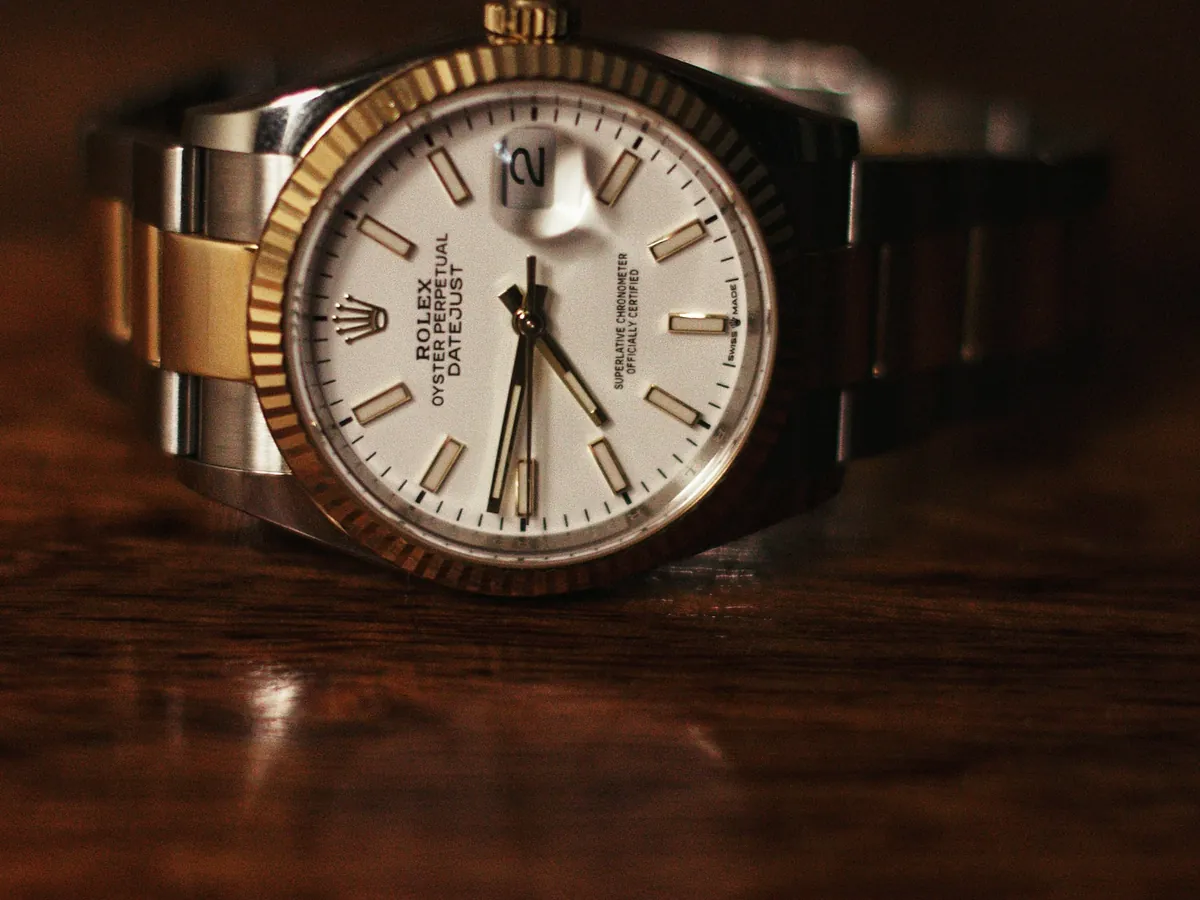
The five-digit era is where the modern pattern settles. The first digits name the family. The fourth digit often codes the bezel, and the fifth codes the metal. For example, the 16610 is a steel Submariner Date. Meanwhile, the 16233 is a Datejust with a fluted bezel (3) in yellow Rolesor (3).
Six-digit references
Around the early 2000s, Rolex added a leading digit as models were redesigned. In general, "11" marks the first six-digit generation and "12" the current one. So the 116610LN became the 126610LN in 2020, and the 116900 became the 126900. A leading "2" often signals a larger or different case, as with the Day-Date 40 228238 beside the 36 mm 128238.
The rule is not strict. The current Explorer 124270 followed the 214270, a "2" reference, because Rolex returned to a 36 mm case. Similarly, the Deepsea 136660 uses its own prefix. So use the leading digits as a hint, then confirm.
The last digit: metal codes
The final digit is the most reliable part of Rolex reference numbers. On five- and six-digit references it tells you the case metal. This one digit is also the quickest fraud check. A "yellow gold" Day-Date whose card ends in 3 is a Rolesor reference, not solid gold.
| Last digit | Metal | Examples |
|---|---|---|
| 0 | Oystersteel (stainless steel) | 126610LN, 126000, 226570 |
| 1 | Everose Rolesor (steel and Everose gold) | 126711CHNR, 126331, 126621 |
| 2 | Rolesium (steel and platinum) | 126622, 268622, 126502 |
| 3 | Yellow Rolesor (steel and yellow gold) | 126613LB, 126713GRNR, 126503 |
| 4 | White Rolesor (steel with white gold bezel) | 126334, 279174, 336934 |
| 5 | 18 ct Everose gold | 126715CHNR, 126505, 128235 |
| 6 | 950 platinum | 126506, 228236, 52506 |
| 7 | RLX titanium (recent pattern, not a classic code) | 226627, 126067 |
| 8 | 18 ct yellow gold | 126618LB, 126718GRNR, 128238 |
| 9 | 18 ct white gold | 126729VTNR, 126509, 52509 |
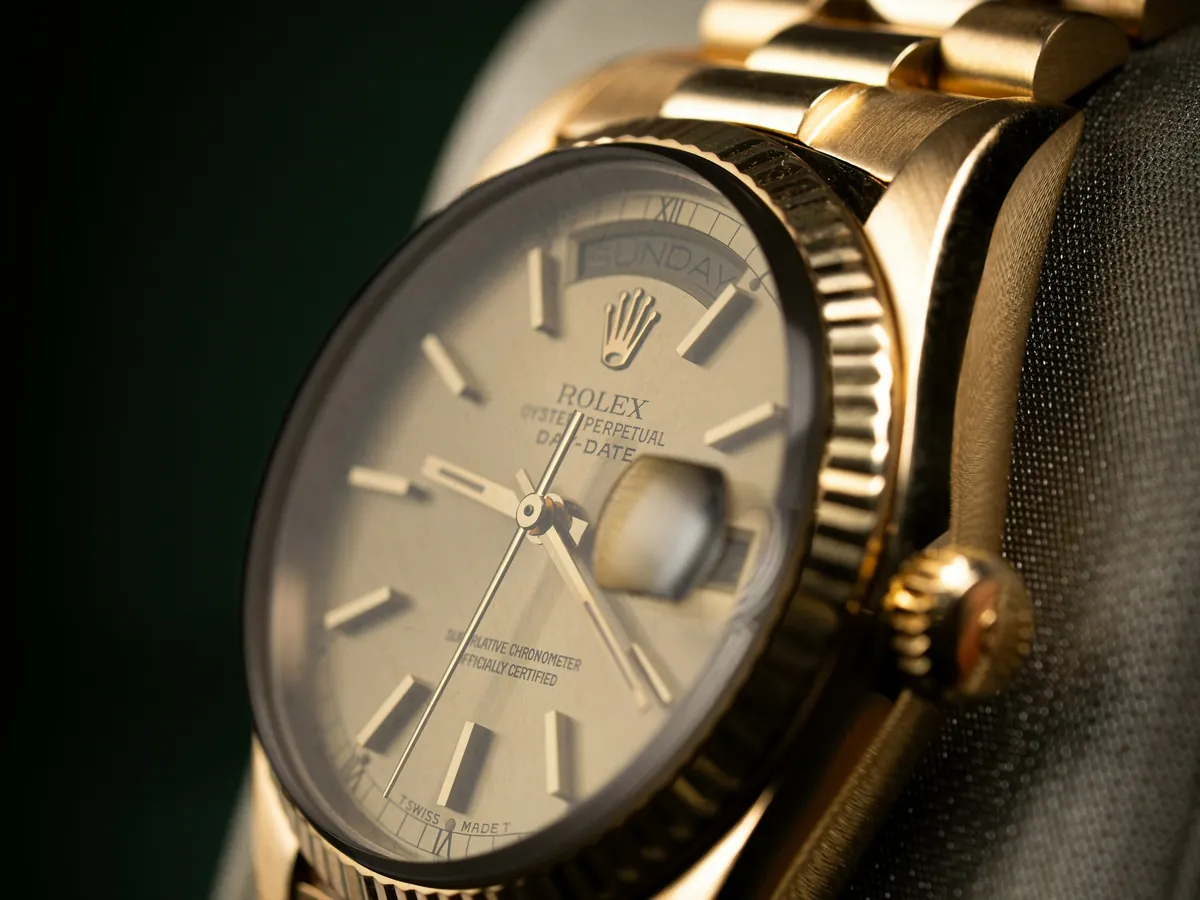
The code also explains price gaps that confuse new buyers. For instance, the 126334 and 126300 look alike from a distance. However, the 4 means a white gold fluted bezel, and the price follows: US$11,650 against US$8,950 at retail. Our Rolex materials guide explains each alloy.
The second-last digit: bezel style
On dress models, the digit in reference numbers before the metal code usually describes the bezel. A 0 means a smooth or domed bezel, and a 3 means a fluted one. The pattern is easy to see in the Datejust and Day-Date lines.
- 126300 (smooth steel bezel) vs 126334 (fluted white gold bezel).
- 126200 (smooth) vs 126234 (fluted), the 36 mm pair.
- 278240 (smooth) vs 278274 (fluted), in the 31 mm case.
- 228206 (domed platinum bezel) vs 228236 (fluted platinum bezel).
On sports models, by contrast, these middle digits belong to the model family. The 126610 is a Submariner, the 126710 a GMT-Master II, and the 126600 a Sea-Dweller. So do not try to read a bezel code into them.
Letter suffixes: bezel and colour codes
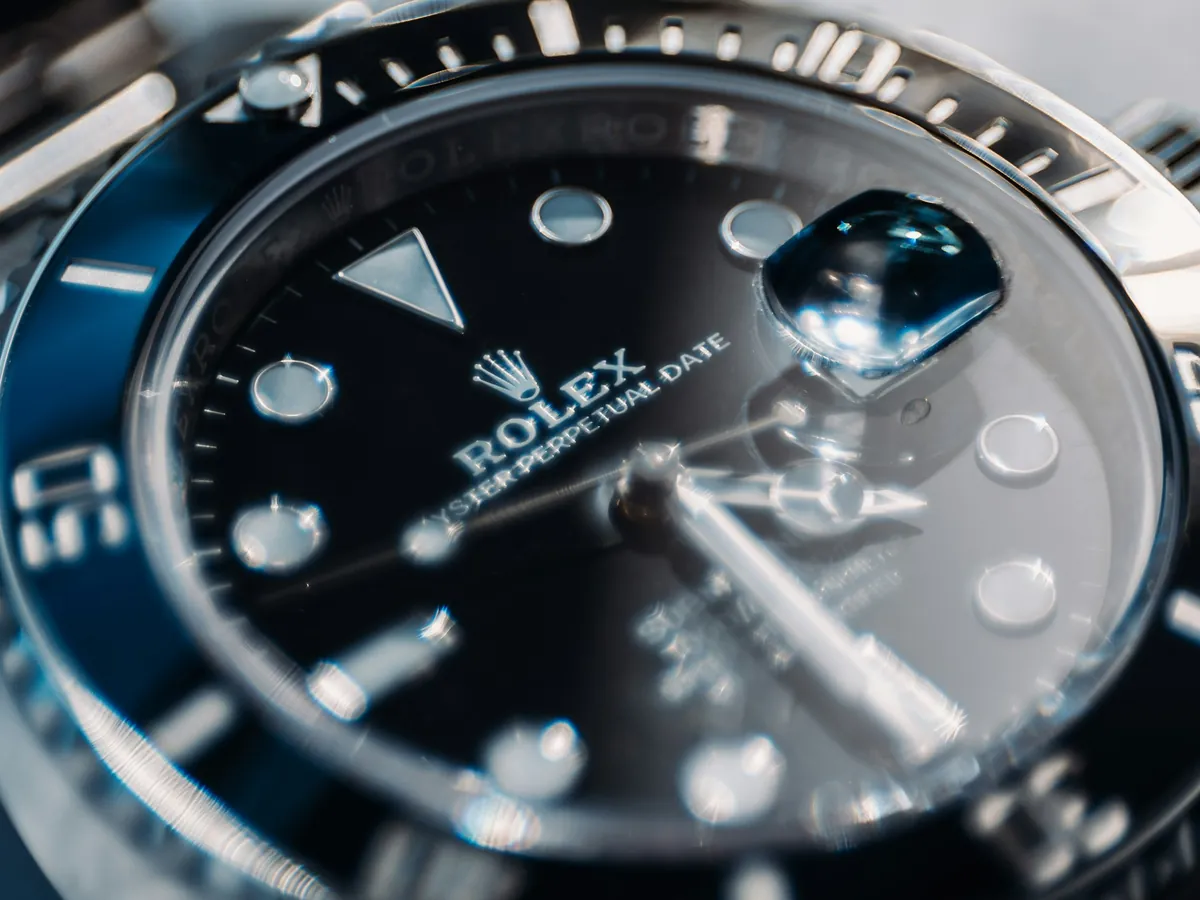
Letters after the reference numbers usually describe the bezel colour, using French abbreviations. They separate watches that share the same digits. For example, the 126710BLRO, 126710BLNR and 126710GRNR share a steel case and calibre, yet trade at different prices because of the bezel.
| Suffix | Meaning | Examples |
|---|---|---|
| LN | Lunette Noire: black bezel | 126610LN, 126515LN |
| LV | Lunette Verte: green bezel | 126610LV "Starbucks", 116610LV "Hulk" |
| LB | Lunette Bleue: blue bezel | 126619LB, 136668LB |
| BLRO | Bleu/Rouge: blue and red | 126710BLRO "Pepsi" |
| BLNR | Bleu/Noir: blue and black | 126710BLNR "Batman", 116710BLNR |
| GRNR | Gris/Noir: grey and black | 126710GRNR, 126718GRNR |
| CHNR | Chocolat/Noir: brown and black | 126711CHNR "Root Beer" |
| VTNR | Vert/Noir: green and black | 126720VTNR "Sprite" |
| GV | Glace Verte: green sapphire crystal | 116400GV |
| RBR, TBR, SARU and similar | Gem-set versions (diamonds or coloured stones) | Not covered on this site; meanings vary by model |
Where the suffix logic bends
Suffixes are not always applied to reference numbers. The platinum Daytona 126506 has a chestnut Cerachrom bezel, yet no suffix. Many gold and Rolesor Datejusts have none either. Also, nicknames are not part of the reference. "Batman" and "Batgirl" are both 126710BLNR; only the bracelet and dial code differ.
Genuine: bezel action and alignment
- Divers' bezels: 120 firm, evenly spaced clicks, one direction only
- Pearl or triangle lands exactly on 12 at every full click
- No back-play or wobble when pressed
Warning signs
- Fewer or mushy clicks, or it turns both ways
- Triangle stops just short of or past 12
- Gritty feel and a hollow, high-pitched sound
Dial and bracelet codes: the -0001 suffix
After the main reference, Rolex uses a four-digit catalogue code for each dial and bracelet combination. You see it in Rolex's own product listings and on some retailer paperwork. Collectors use it to pin down a variant exactly.
| Full code | What it identifies |
|---|---|
| 126710BLRO-0001 | Pepsi on Jubilee bracelet |
| 126710BLRO-0002 | Pepsi on Oyster bracelet |
| 126720VTNR-0001 | Sprite on Oyster bracelet |
| 126720VTNR-0002 | Sprite on Jubilee bracelet |
| 126500LN-0001 | Daytona, white dial |
| 126500LN-0002 | Daytona, black dial |
| 126518LN-0014 | Yellow gold Daytona, turquoise blue and black dial |
Note the trap. On the Pepsi, -0001 is the Jubilee. On the Sprite, -0001 is the Oyster. In other words, the code is a catalogue number, not a rule, so always look it up. The dial code also matters for price. The white-dial 126500LN, for example, usually trades above the black-dial version.
Decoding real references, step by step
Here is how reference numbers decode on four real watches. Read the digits from right to left, because the metal code is the most dependable.
- 126713GRNR. Last digit 3: yellow Rolesor. 1267: current GMT-Master II. GRNR: grey and black bezel. Result: the two-tone GMT, see the 126713GRNR page.
- 228236. Last digit 6: platinum. Second-last 3: fluted bezel. Leading 22: the 40 mm Day-Date. Result: the platinum Day-Date 40 with fluted bezel.
- 278271. Last digit 1: Everose Rolesor. Second-last 7 belongs to this 31 mm family, so read it as part of the model. Result: the Datejust 31 278271.
- 124060. Last digit 0: steel. No suffix, because the Submariner without date has only one bezel. Also, no date means no Cyclops lens.
Genuine: cyclops magnification
- Date fills the lens edge to edge
- Numerals stay sharp right to the lens rim
- Lens sits centred over the date window
Warning signs
- Date looks small, with a visible margin
- Lens slightly off-centre or bubbled
- Strong blue anti-glare tint on top of the lens
Reference vs serial: which number answers which question
The reference answers "what model is this?". The serial answers "which watch is this, and when was it made?". When the card, the case and the watch's physical details all agree on both, the paperwork is consistent. When any one differs, stop and ask why. Our Rolex box and papers guide covers card checks, and the serial number guide covers dating.
Genuine: rehaut engraving alignment
- Each engraved crown and letter lines up with its minute marker
- Engraving is crisp, even in depth, and readable at 12 o'clock
- Serial number engraved on the rehaut at 6 on modern pieces
Warning signs
- Letters drift between markers as they go around the ring
- Shallow, sandy-looking or uneven engraving
- Serial at 6 printed rather than engraved, or wrong format
Using reference numbers when you shop
Reference numbers are the most precise search terms you have. A listing titled "Rolex GMT Batman" could be a 116710BLNR from 2013 or a current 126710BLNR. Those are different watches with different calibres and prices. So search by reference, and filter results the same way.
Reference numbers also make price checks fair. Compare a listing only with others of the same full reference, ideally the same dial code too. A 126613LB and a 126613LN differ only in bezel and dial colour, yet buyers rarely treat them as equals. Our reference pages give the current bands, and the used Rolex prices guide sets them in context.
Finally, read the reference on the card before you read the asking price. If the card says 126710BLNR and the watch has a Pepsi bezel, the reference numbers have already told you the set is wrong. In Malaysia, where many private sales start on Mudah or Lowyat, this one check filters out a surprising number of bad listings.
Rolex reference number FAQ
What does LN mean on a Rolex?
LN stands for Lunette Noire, French for black bezel. It appears on the Submariner 126610LN, the Daytona 126500LN and the GMT-Master II 116710LN. On the Daytona it marks the black Cerachrom bezel rather than a metal one.
What does BLRO stand for?
BLRO stands for Bleu/Rouge, the blue and red 'Pepsi' bezel. It appears on the steel 126710BLRO and the white gold 126719BLRO. Both were discontinued in 2026.
What is the difference between a reference number and a serial number?
The reference identifies the model, such as 126610LN. Thousands of watches share it. The serial identifies one individual watch and is unique. Our serial number guide explains where to find it and what it proves.
What does the last digit of a Rolex reference mean?
On five- and six-digit references it usually codes the metal. 0 is steel, 1 Everose Rolesor, 2 Rolesium, 3 yellow Rolesor, 4 white Rolesor, 5 Everose gold, 6 platinum, 8 yellow gold and 9 white gold. Recent titanium models end in 7, but that is a pattern rather than a published code.
Does Rolex publish what its reference numbers mean?
No. Rolex has never published a key to its numbering. The codes in this guide are patterns that collectors and dealers have mapped over decades. They hold for most current models, but there are exceptions, so always confirm against the reference page.
What does -0001 after a Rolex reference mean?
It is Rolex's catalogue code for a specific dial and bracelet combination. For example, the 126710BLRO-0001 is the Jubilee version and -0002 the Oyster. The numbering is not consistent between models, so look each one up rather than assuming.
Last updated . Written and fact-checked by the Rolex Malaysian editorial team. Specifications and prices are re-checked quarterly.